Your dog's itching has settled on the elimination diet — congratulations, that's the hard part done. But you still don't know which food is the culprit, and you can't feed a hydrolysed prescription diet forever without knowing. That's what the reintroduction phase (also called the challenge phase) is for: adding foods back one at a time to see which one brings the signs back.
Done carefully, it hands you a precise list of safe and unsafe ingredients to build a normal diet around. Done carelessly, it muddies everything you just proved. Here's how to do it right.
Step 1: Make sure you're actually ready
Don't begin until your dog is clearly comfortable on the elimination diet — minimal scratching, calm ears, paws left alone. Reintroducing foods on top of lingering symptoms makes a flare impossible to read. If you're not there yet, give the diet more time first (see our 8–12 week timeline).
And remember the confirmation step that comes first: the very first 'challenge' is usually the original diet itself.
If the animal's pruritus and skin lesions resolve and do not relapse while the elimination diet is fed, an FA can only be confirmed if the clinical signs reappear upon reintroduction of the previous diet.
Step 2: What order to reintroduce foods
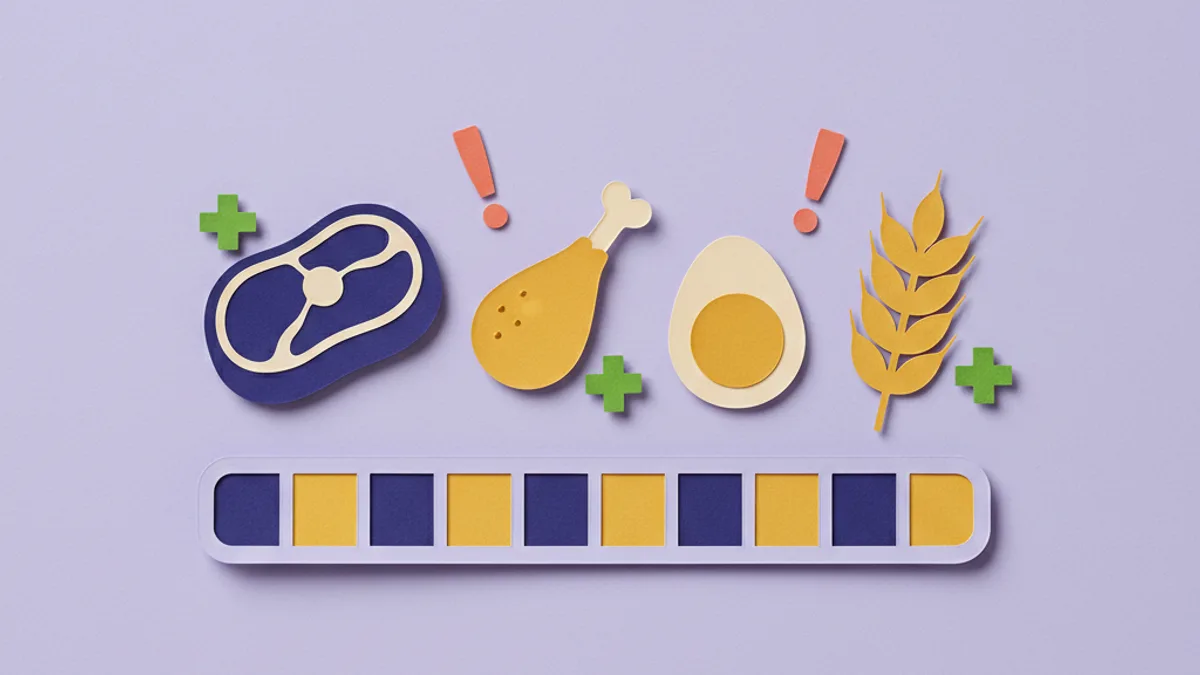
There's no single mandated order — your vet may tailor it — but a sensible, common approach is to challenge the most likely culprits in a structured way, one protein or ingredient per challenge. The usual suspects are well established:
Beef, dairy, chicken and wheat cause the majority of confirmed cases — test these deliberately rather than assuming a grain is to blame. Source: Mueller & Olivry, BMC Veterinary Research (2016)
Test individual ingredients (plain cooked chicken, then beef, then a dairy item, and so on) rather than mixed commercial foods, so a flare points at one thing, not five.

Step 3: How long to test each food
Keep the elimination diet as the base, and add a single test ingredient. Watch for up to two weeks: many dogs that react do so within hours to a few days, but some take longer, so don't clear an ingredient after just a day or two. If nothing happens in that window, that food is probably safe — note it and move on.
If signs flare, you've found a trigger. Stop that ingredient, return fully to the elimination diet, and wait for your dog to settle back to baseline before starting the next challenge. VCA Animal Hospitals describes this exact challenge-and-settle rhythm as the heart of the diagnostic.
Step 4: Record everything (or it's wasted)
Reintroduction generates a lot of small, easily-forgotten facts: what you fed, on which date, and how your dog looked over the following two weeks. Miss a few and the picture blurs. As UK dermatologist Dr. Hilary Jackson emphasises, it's the structured provocation — and reading it accurately — that confirms the diagnosis.
- Date you introduced each ingredient.
- Daily note on itch, ears, paws, stool and mood.
- Date and nature of any flare.
- Date you returned to baseline before the next test.
Step 5: Build the final safe diet
When you've worked through the likely triggers, you'll have a clear list of foods that are safe and foods that flare. From there, you and your vet can pick a complete, balanced everyday diet that avoids the triggers — and you can finally retire the strict trial. That's the payoff for doing the reintroduction properly instead of guessing.
Add foods one at a time and let ThePawcess build your dog's safe/unsafe list automatically.
Track your reintroduction — freeFrequently asked questions
How long do you reintroduce each food in a dog elimination diet?
Add one ingredient at a time and watch for up to two weeks before deciding it's safe. Many dogs that react flare within hours to a few days, but some take longer, so don't clear a food too quickly.
What if my dog reacts during reintroduction?
That ingredient is a likely trigger. Stop feeding it, return fully to the elimination diet, and wait for your dog to settle back to baseline before challenging the next ingredient.
Do I have to reintroduce foods at all?
If you want your dog to eat a normal varied diet, yes — reintroduction is how you learn which specific foods to avoid. Some owners instead keep the dog on a proven hydrolysed or novel-protein diet long-term; discuss the trade-offs with your vet.
Experts & sources cited
Every quote in this article is real and links to its original source. ThePawcess is not a veterinary practice — this is educational, not a diagnosis.
- Dr. Heng L. Tham, DVM, DACVDBoard-certified veterinary dermatologist, Today's Veterinary Practice · USA
- VCA Animal HospitalsClinical client education (reviewed by veterinarians) · USA
- Dr. Hilary A. Jackson, BVM&S, DVD, DACVD, DECVDThe Dermatology Referral Service, Glasgow — Veterinary Dermatology (2024) · UK
- Mueller & OlivryBMC Veterinary Research — common food allergen sources in dogs (2016) · USA