You changed your dog's food — new brand, new flavour, maybe a 'sensitive skin' formula — and now they're scratching, chewing their paws, or shaking their head more than before. It's a natural thing to connect, and sometimes the food really is the cause. But itching is one of the most non-specific signs in dogs, and a food change is often a coincidence sitting on top of something else.
Here's how to think about it clearly, what the real culprits usually are, and how to get an actual answer instead of swapping bags forever.
Could the new food really be the cause?
Two different things get blamed on 'the new food', and they're worth separating:
- Food intolerance / sudden diet change — switching foods too quickly can upset the gut (loose stool, gas) for a few days. That's a digestive reaction, not an allergy, and it usually settles.
- Food allergy (adverse food reaction) — an immune reaction to a specific ingredient, showing up as itchy skin, recurring ear infections, paw licking or red skin. Crucially, it develops to ingredients a dog has eaten for a while — so the trigger is often something familiar, not necessarily the brand-new food.
That second point surprises people: dogs become allergic to foods they've been exposed to repeatedly. So a dog can start reacting to chicken it's eaten for two years — the new bag just happened to coincide. The Merck Veterinary Manual describes food allergy as a reaction to a dietary component, typically a protein, that develops over time.
What actually triggers food allergies in dogs
If it is food, the likely ingredients are well documented — and they're mostly animal proteins, not the grains marketing tends to vilify.
Beef alone accounts for about a third of confirmed cases. 'Grain-free' isn't automatically hypoallergenic — and grain-free diets carry their own considerations to discuss with your vet. Source: Mueller & Olivry, BMC Veterinary Research (2016)
The look-alikes you can't ignore
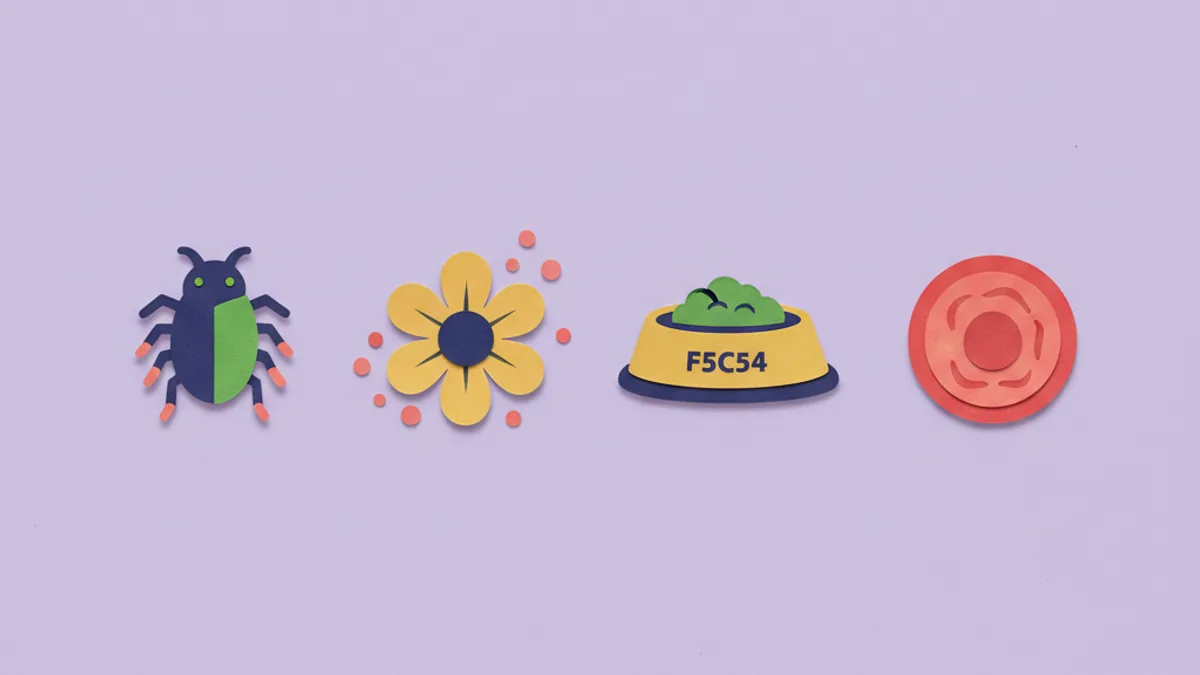
Before you blame food, rule out the things that itch exactly the same way:
- Fleas and mites — the most common itch of all, and easy to miss.
- Environmental allergies (atopic dermatitis) — pollen, dust mites, mould; often seasonal, and more common than food allergy.
- Skin or yeast infections — frequently secondary, and they keep the itch going on their own.
- Dry skin or contact irritants — new bedding, shampoos, cleaning products.
This overlap is the whole reason guessing fails. You can't tell these apart by eye, and a dog often has more than one at once.
What to do right now
- Don't keep bag-swapping. Randomly changing foods muddies the picture and upsets the gut. Each new 'hypoallergenic' bag without a plan just resets the clock.
- Check flea control is current — your vet may want to treat regardless, because fleas are so often involved.
- See your vet to examine the skin and ears and treat any infection — a comfortable dog is far easier to assess.
- If food is suspected, run a proper elimination trial — the only reliable way to confirm it.
If your vet does suspect food, the path forward is a structured elimination diet: a single novel-protein or hydrolysed diet for 8–12 weeks, then a re-challenge. As Tufts' Dr. Freeman notes, that trial only works if you control everything your dog eats — so it's worth doing once, properly.
Not sure if it's food? Run the free flare-up checker, then start a guided trial if it points to diet.
Check your dog's signs freeFrequently asked questions
Why is my dog itchy after switching to a new food?
It can be the new food, but often it isn't. A fast diet change can upset the gut for a few days, and true food allergies usually develop to ingredients eaten for a while — so a familiar protein may be the real trigger. Environmental allergies and fleas cause identical itching and are common coincidences.
How quickly can a dog react to a food it's allergic to?
Skin signs from a food allergy build up rather than appearing instantly, and a dog must usually have eaten the ingredient before. Sudden hives, facial swelling or breathing trouble after eating, however, can be an acute reaction needing urgent veterinary care.
Is grain-free food better for an itchy dog?
Not necessarily. Most confirmed food allergens are animal proteins like beef, dairy and chicken — not grains. Grain-free diets also carry separate considerations worth discussing with your vet. The reliable answer comes from an elimination trial, not the label.
Experts & sources cited
Every quote in this article is real and links to its original source. ThePawcess is not a veterinary practice — this is educational, not a diagnosis.
- Dr. Lisa M. Freeman, DVM, PhD, DACVIM (Nutrition)Cummings School of Veterinary Medicine at Tufts University (Petfoodology) · USA
- Merck Veterinary ManualCutaneous food allergy in animals (peer-reviewed reference) · USA
- Mueller & OlivryBMC Veterinary Research — common food allergen sources in dogs (2016) · USA
- Dr. Heng L. Tham, DVM, DACVDBoard-certified veterinary dermatologist, Today's Veterinary Practice · USA