Running an elimination diet trial takes discipline at the best of times. Add a second dog — or a cat, or a toddler who drops food — and suddenly your perfectly-planned trial has a dozen ways to spring a leak. One stolen mouthful from a housemate's bowl, one shared water station, one quick clean-up of the cat's leftovers, and the experiment is contaminated. Multi-pet households are where good trials quietly die. The good news: with a clear plan, you can absolutely run a clean trial in a busy home.
Why one slip matters so much
It's tempting to think a little of the other dog's food won't matter. It does. A food trial is a controlled experiment with one variable, and trace amounts of the wrong protein can keep an allergic reaction going. As Tufts' Dr. Lisa Freeman puts it, a successful trial has to control everything a dog eats:
The successful elimination diet trial has to control everything that goes into your pet's mouth, such as treats, rawhides, dental chews and toothpaste, table food, dietary supplements, and flavored medications.
And the amount needed to spoil it is tiny. Dermatologist Dr. Heng Tham notes that even small exposures interfere with the result:
Small amounts may be sufficient to induce a hypersensitivity reaction and will interfere with the assessment of the EDT.
In a multi-dog home, the 'small amount' is usually a few stolen bites of a housemate's regular food — invisible to you, but enough to muddy weeks of effort.
The slip costs you weeks, not minutes
Here's why it's worth the hassle. A food trial's payoff builds slowly over two to three months — and a contamination event can knock you back toward the start. Look at how gradually the result accrues:
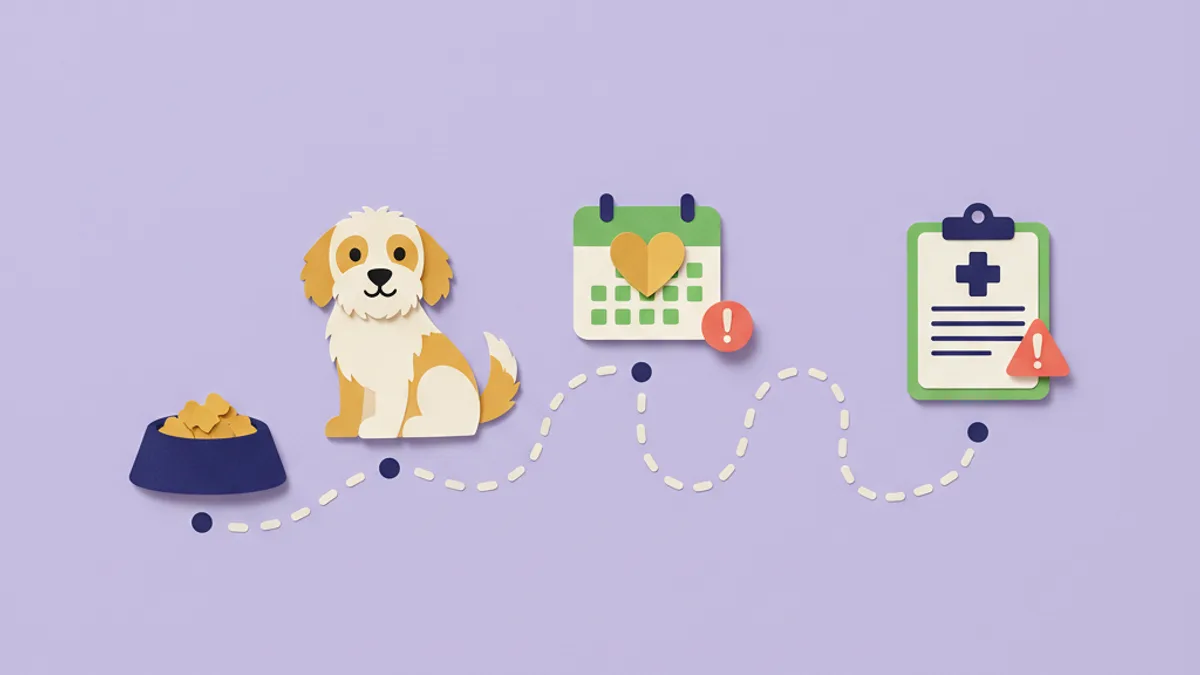
It takes about 8 weeks to see results in over 90% of food-allergic dogs. A single contamination event can reset the clock — so a few weeks of strict household discipline protects months of work. Source: Olivry & Mueller, BMC Veterinary Research (2015)
Best option: put everyone on the trial diet
The simplest way to remove the risk is to remove the temptation: feed all the dogs in the house the same trial diet for the trial period. If there's nothing 'forbidden' in the house, there's nothing to steal. Royal Canin's veterinary guidance makes this the first recommendation — feeding all same-species pets the trial food reduces cross-contamination and unseen exposure from shared bowls.
Two caveats: clear it with your vet first (the trial diet must be appropriate for the other dogs' life stage and health), and it can cost more. But for many households it's far easier than policing separate meals for three months — and it's kinder to your stress levels.
If you can't: strict feeding separation
When the other pets stay on their own food, separation becomes the whole game:
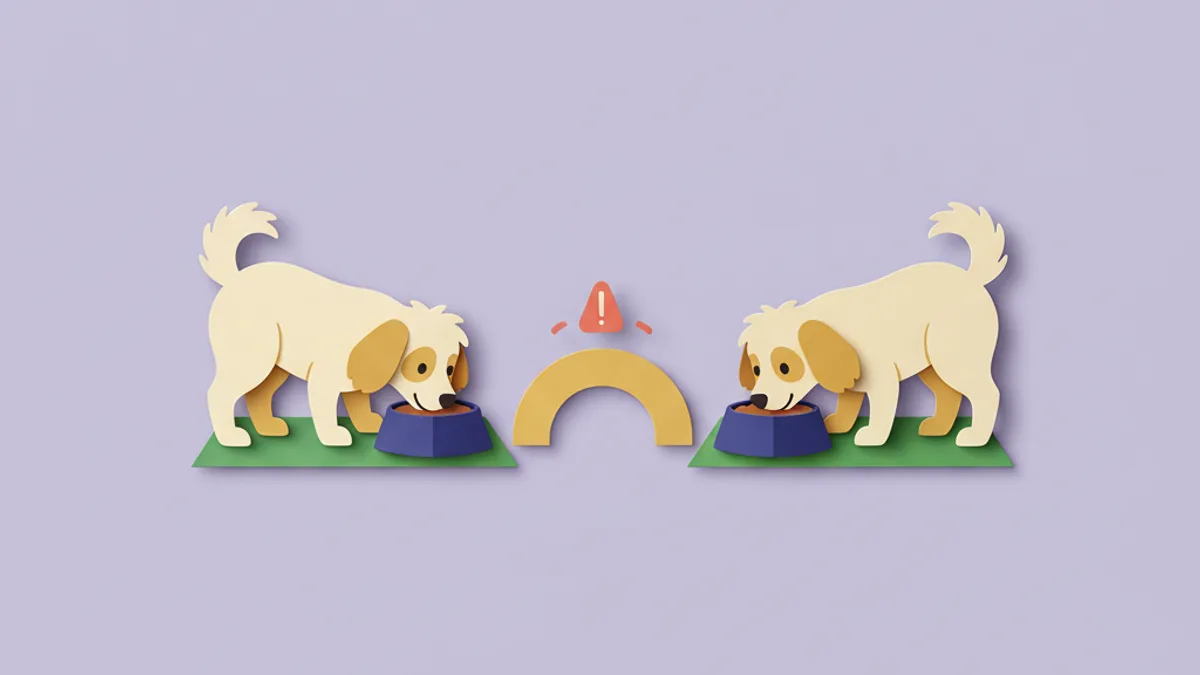
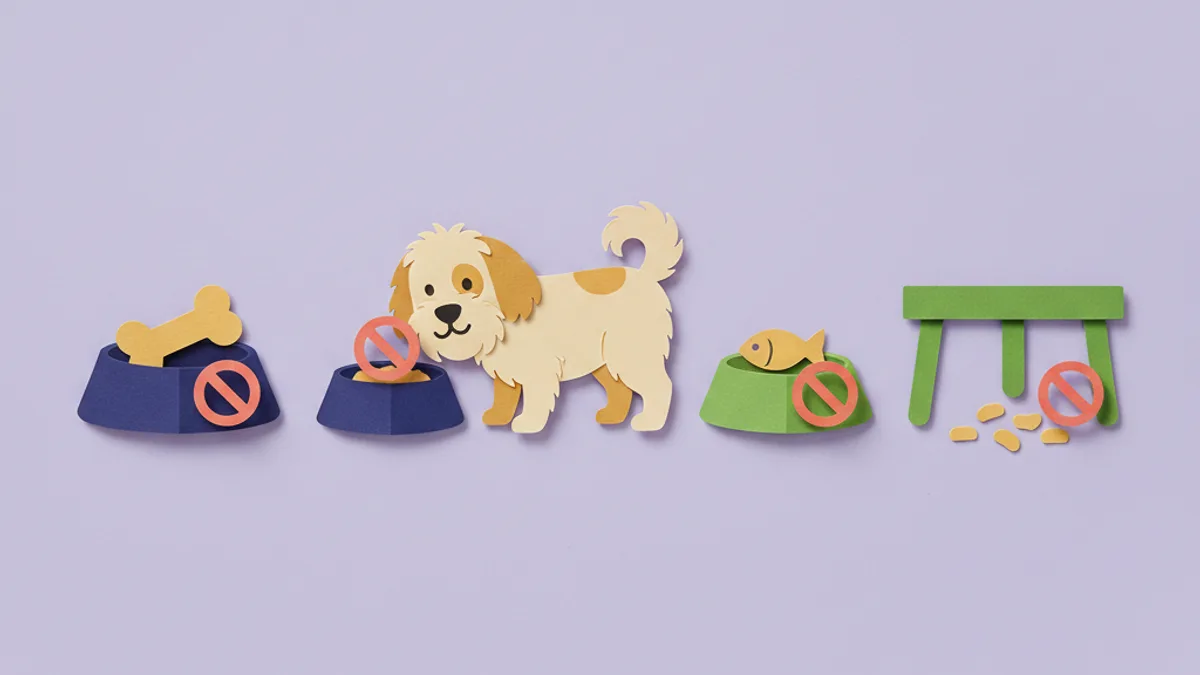
- Feed in separate rooms, behind a closed door or a baby gate — not just 'across the kitchen'.
- Supervise every meal and stay until everyone's finished. No wandering off mid-meal.
- Pick up all bowls immediately — no free-feeding, no bowls left down 'for later'.
- Separate water if needed — and clean up any food crumbs around feeding areas.
- Feed the trial dog first or last consistently, so there's a clear routine everyone follows.
The sneaky sources owners forget
Even with feeding sorted, multi-pet homes hide extra traps:
- The cat's food and bowl — often left up high, but reachable, and a magnet for dogs.
- The litter box — cats' diets differ, and litter-box raiding is a real (if unpleasant) contamination route.
- Shared treats and chews — every pet gets the same trial-safe treats, or none (see safe treats during a trial).
- Floor scavenging — dropped food, crumbs under the table, the toddler's snacks.
- Coprophagia — eating another pet's faeces introduces that pet's diet; manage it during the trial.
Royal Canin's guidance is blunt on this: access to other animals' food, licking dishes, and similar slips all confound a trial — so monitor or separate pets at mealtimes. If a slip does happen, don't hide it from yourself: note it, and ask your vet whether to extend or restart, because as Dr. Tham's point makes clear, the trace exposure has already entered the experiment.
Make it a household project
The trials that succeed in busy homes are the ones the whole household runs, not one stressed person. Brief everyone — partners, kids, dog-walkers, visitors — before day one. Put a simple rules note on the fridge. Decide who feeds whom and when. And log slips honestly so you always know whether the trial is still on track. Three months of teamwork beats six months of guessing.
Log every slip the moment it happens, and ThePawcess tells you whether to keep going or restart.
Keep the trial honest — freeFrequently asked questions
How do I do a dog food elimination trial with multiple dogs?
The cleanest approach is to feed all the dogs the same trial diet for the trial period (with your vet's okay), so there's nothing 'forbidden' to steal. If the others stay on their own food, feed pets in separate rooms, supervise every meal, and pick up all bowls immediately to prevent cross-contamination.
Will my dog stealing the other dog's food ruin the trial?
It can. Even a small amount of the wrong protein can keep an allergic reaction going and interfere with the result, and a contamination event may mean extending or restarting the trial. That's why feeding separation (or putting all dogs on the trial diet) matters so much in multi-pet homes.
Can all my dogs eat the elimination diet, even the ones without allergies?
Often yes, for the trial period, and it's the easiest way to prevent cross-contamination — but check with your vet first to make sure the trial diet is appropriate for each dog's life stage and health. It can cost more, but it removes the biggest source of accidental slips.
What about the cat's food during my dog's food trial?
It's a common hidden contamination source. Dogs raid cat bowls and even litter boxes. Keep the cat's food out of reach, feed pets separately, clean up promptly, and manage any litter-box access during the trial.
Experts & sources cited
Every quote in this article is real and links to its original source. ThePawcess is not a veterinary practice — this is educational, not a diagnosis.
- Dr. Lisa M. Freeman, DVM, PhD, DACVIM (Nutrition)Cummings School of Veterinary Medicine at Tufts University (Petfoodology) · USA
- Dr. Heng L. Tham, DVM, DACVDBoard-certified veterinary dermatologist, Today's Veterinary Practice · USA
- Royal Canin AcademyVeterinary education — elimination diet trials for pets · UK
- Olivry & MuellerBMC Veterinary Research — duration of elimination diets (2015) · USA