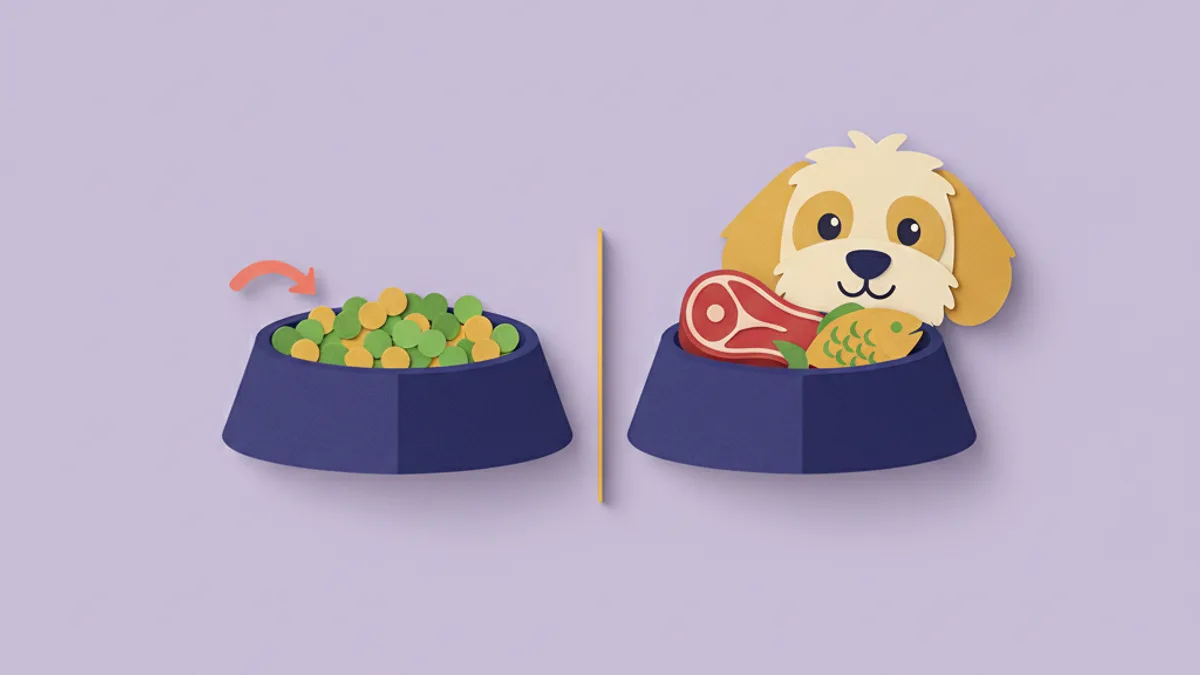
When a vet recommends an elimination diet trial, they'll usually offer two real options: a hydrolyzed diet or a novel-protein diet. (The third thing owners reach for — a 'limited ingredient' supermarket food — is the one that doesn't work, and we'll explain why.) Both proper options can diagnose a food allergy equally well. The art is matching the right one to your dog.
This guide explains how each works in plain English, the single question that decides which to choose, and what board-certified dermatologists actually recommend.
How a novel-protein diet works
A food allergy is an immune reaction to a specific protein the dog has met before. A novel-protein diet sidesteps the immune system by using a protein (and carbohydrate) your dog has genuinely never eaten — historically things like venison, rabbit, kangaroo or duck. With no prior exposure, there's nothing for the immune system to react to.
The catch is in the word 'never'. Novel only works if you can be sure your dog hasn't had that protein — which means you need an accurate diet history. With today's varied foods and treats, finding a truly novel protein is getting harder.
How a hydrolyzed diet works
A hydrolyzed diet takes a protein and chemically chops it into fragments so small the immune system no longer recognises them as a threat — the allergic alarm simply doesn't trip. The clever part: it doesn't matter whether your dog has eaten that protein before, because the immune system can't 'see' it any more.
That's why dermatologists lean toward hydrolyzed diets, especially extensively hydrolyzed ones. NC State's clinical nutrition service notes most veterinary dermatologists recommend an extensively hydrolyzed diet in which the proteins are broken down even smaller than typical. UK referral dermatology service The Skin Vet puts its preference plainly:
I recommend using these products for exclusion diet trials, especially those made from proteins unlikely to be fed to our pets such as feathers and soya.

Which should you choose? The one question that decides
Since both work equally well, the decision usually comes down to one thing: do you know exactly what your dog has eaten?
- Reliable, complete diet history → novel protein is an option. If you know every food and treat your dog has had, you can pick a protein that's genuinely new.
- Unknown or messy history (rescue dog, lots of treats, scavenger) → hydrolyzed wins. If you can't be sure what's truly novel, hydrolyzed removes the guesswork entirely.
- A faster transition is another hydrolyzed advantage — many dermatologists switch over just 3–5 days, minimising further allergen exposure.
There's also a practical, long-term angle: a novel protein you 'use up' in a trial can no longer be used later, whereas hydrolyzed keeps your dog's future protein options open. Your vet will weigh all of this with you.
Why supermarket 'limited ingredient' food fails
It's tempting to grab a 'hypoallergenic' or 'limited ingredient' bag off the shelf. Two problems sink this:
- It's often not actually novel — it may contain a protein your dog already eats.
- It's frequently contaminated — multiple studies have found over-the-counter diets contain proteins not listed on the label, from shared factory lines.
Veterinary prescription diets are made differently. As The Skin Vet explains, veterinary nutrition companies test diet batches for contamination so their single-protein or hydrolyzed status is reliable:
They regularly test their diet batches with highly accurate protein detection methods to ensure their status as single protein source diets is fully reliable (polymerase chain reaction tests) – they are proven to be free of other protein contamination.
That quality control is exactly why a trial diet should come from your vet, not the pet-store shelf. And it's worth remembering which everyday proteins a novel diet is trying to avoid in the first place:
A genuine novel protein steers clear of the common offenders. Hydrolyzed diets sidestep the question entirely by shrinking the protein below the immune system's radar. Source: Mueller & Olivry, BMC Veterinary Research (2016)
Whichever you choose, the rules are the same
The diet type matters less than how strictly you run the trial. For both hydrolyzed and novel-protein diets:
- Feed it exclusively for 8–12 weeks — no other food, treats, chews, table scraps, flavoured supplements or flavoured medications (see safe treats during a trial).
- Then re-challenge with the old food to confirm the diagnosis.
- Keep daily records so the result is readable.
Increasing the duration of the EDT to 8 weeks increases the sensitivity to more than 90%.
And as Tufts' Dr. Lisa Freeman warns, get the controls wrong and you can invalidate the whole trial — so pick the diet with your vet, then run it properly.
Whichever diet you choose, ThePawcess counts the weeks, catches slips, and builds the record your vet needs.
Run your trial — freeFrequently asked questions
Is a hydrolyzed or novel-protein diet better for a dog food allergy trial?
Neither is universally better — studies show they're equally effective for diagnosing food allergy. The choice depends on your dog's diet history: novel protein needs a protein your dog has truly never eaten, so it requires a reliable history; hydrolyzed works regardless of history because the protein is broken too small to trigger a reaction, which is why dermatologists often prefer it.
What is a hydrolyzed protein dog food?
It's a veterinary diet in which the protein has been chemically broken into fragments so small the immune system no longer recognises them, so it can't trigger an allergic reaction — even to a protein the dog has eaten before.
Can I use a store-bought limited-ingredient diet for a food trial?
It's not recommended. Over-the-counter 'limited ingredient' foods often contain a protein your dog already eats and are frequently contaminated with undeclared proteins from shared factory lines. Veterinary prescription diets are batch-tested for contamination, which is why a trial diet should come from your vet.
How long do I feed a hydrolyzed or novel-protein diet?
Both are fed exclusively for about 8–12 weeks (around 8 weeks captures more than 90% of food-allergic dogs), followed by a re-challenge with the previous food to confirm the diagnosis.
Experts & sources cited
Every quote in this article is real and links to its original source. ThePawcess is not a veterinary practice — this is educational, not a diagnosis.
- Dr. Lisa M. Freeman, DVM, PhD, DACVIM (Nutrition)Cummings School of Veterinary Medicine at Tufts University (Petfoodology) · USA
- The Skin VetUK referral veterinary dermatology — exclusion diet trial choices · UK
- NC State Veterinary HospitalClinical nutrition service — hydrolyzed diets · USA
- Dr. Heng L. Tham, DVM, DACVDBoard-certified veterinary dermatologist, Today's Veterinary Practice · USA
- Mueller & OlivryBMC Veterinary Research — common food allergen sources in dogs (2016) · USA