It's a maddening pattern. Your dog's ear gets red, smelly and itchy; the vet prescribes drops; within a week or two it clears up. Then a month later — or the next season — it's back. After the third or fourth round, the real question isn't “which drops this time?” It's “why does this keep happening?” And for dogs, the answer is usually the same: the ear isn't the problem. It's the messenger.
Recurring ear infections are one of the most reliable signs of an underlying allergy — sometimes the only outward sign. This guide explains why, where food fits in, and how to stop chasing the infection and start fixing the cause.
Why the ear keeps getting infected
A dog's ear canal is a warm, deep, L-shaped tunnel — a perfect place for yeast and bacteria to flourish if the skin lining it becomes inflamed. Healthy ears keep those microbes in check. But when something inflames the canal, the balance tips and an infection takes hold. Vets call that inflammation the primary cause, and the yeast or bacteria the secondary problem.
Here's the key insight, from veterinary dermatologist Dr. Sandra Koch: the bug you can see isn't the whole story.
The infection is usually only part of the problem.
Antibiotics and ear drops clear the secondary infection — which is why the ear gets better — but if the underlying inflammation is still there, the canal re-inflames and the infection simply returns. That's the loop you've been stuck in.
Allergy is the most common hidden driver
So what causes that underlying inflammation? In dogs, allergy leads the field by a wide margin. In a retrospective study of 100 dogs with acute and chronic-recurrent otitis externa, the single most common primary cause was allergic skin disease.
Allergy was the leading primary cause by far. In dermatology practices, an even higher share of chronic otitis cases trace back to allergic (atopic) disease. Source: Koch, Today's Veterinary Practice — chronic otitis
Both kinds of allergy can do it. Environmental allergy (atopic dermatitis) often inflames the ears along with the paws and skin — and, as Dr. Frane Banovic notes, atopic dermatitis can be seasonal or, most commonly, non-seasonal. Food allergy does the same, and has a particular reputation for the ears.
The food-allergy ear connection
Recurring ear infections are such a classic food-allergy sign that for some dogs they're the only sign — no obvious itching elsewhere, just ears that won't stay clear. A few patterns point toward food specifically:
- Both ears, again and again — food and environmental allergies typically affect both ears, and keep coming back.
- Year-round, not seasonal — non-seasonal ear trouble (every month, regardless of pollen season) leans toward food or indoor allergens.
- Ears plus a grumbly gut — recurrent otitis alongside intermittent loose stool, wind or more frequent pooing raises the suspicion of food.
- Starts young or old — onset outside the typical 1–3 year window for environmental allergy is another nudge toward food.
If that sounds like your dog, the only way to confirm a food trigger is an elimination diet trial — and the ears are often one of the first things to improve when you remove the offending ingredient. (For the bigger picture on telling the two allergy types apart, see food vs. environmental allergies.)
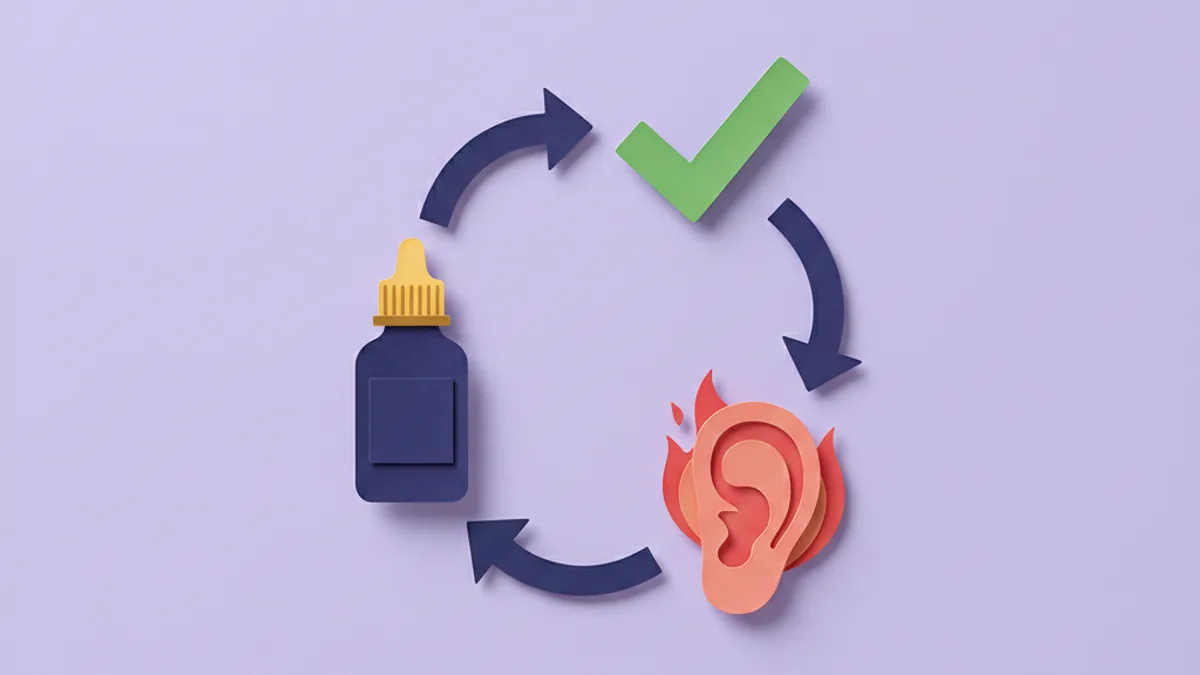
What a recurring ear infection looks like
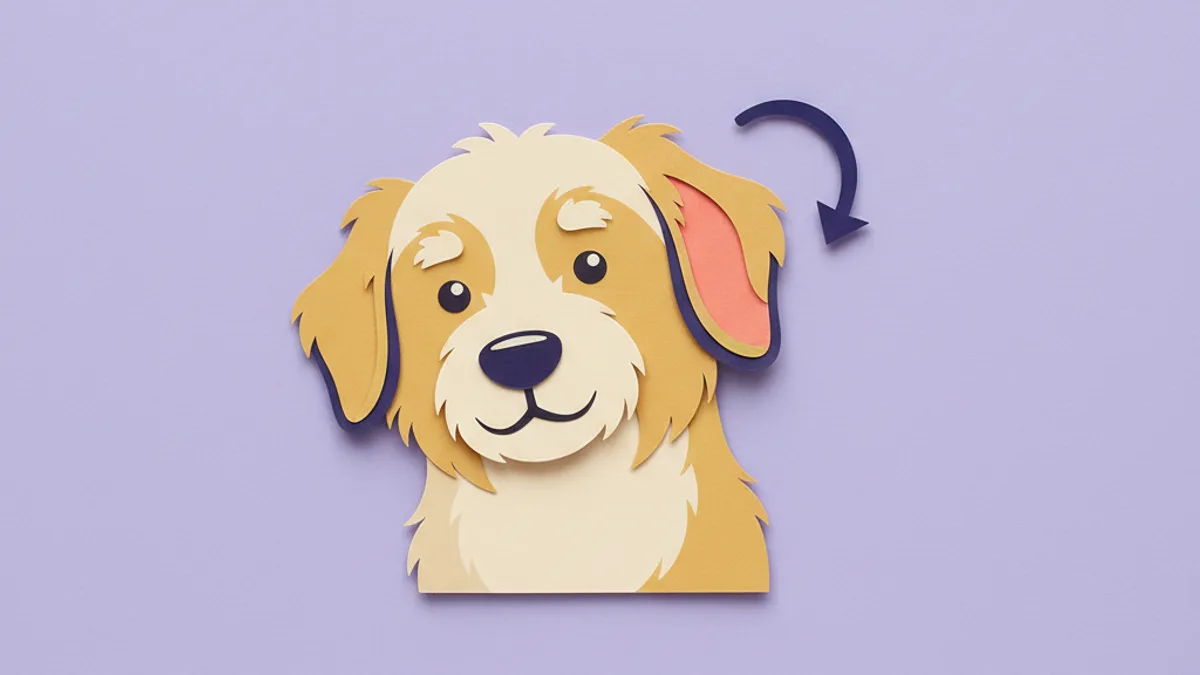
Signs your dog's ears are flaring:
- Head-shaking and ear-scratching.
- Redness or swelling inside the ear flap and canal.
- Brown, yellow or waxy discharge, and a distinctive yeasty or sour smell.
- Rubbing the ear along the floor or furniture.
- Pain when you touch the ear, or holding the head tilted.
How to actually break the cycle
Stopping recurrent ear infections is a two-front job: clear the current infection and find the driver underneath.
- Get an accurate diagnosis — your vet should look in the ear and ideally examine a swab under the microscope (cytology) to see whether it's yeast, bacteria, or both. Treatment differs.
- Treat the infection properly — complete the full course and recheck; a half-treated ear relapses fast.
- Hunt the primary cause — if infections recur, ask directly: could this be allergy? Your vet may treat for fleas, consider environmental allergy, and recommend a food trial.
- Run the food trial if food is suspected — 8–12 weeks of a single novel-protein or hydrolysed diet, then a re-challenge.
- Set up maintenance — once the cause is controlled, a routine ear-cleaning plan from your vet keeps canals healthy.
As Tufts' Dr. Lisa Freeman stresses, that food trial only works if you control everything your dog eats — and UK dermatologist Dr. Hilary Jackson notes the diagnosis is only confirmed when signs resolve on the diet and return on re-challenge. Done properly once, it can end years of recurring ear trouble.
Explore what ear-allergy signs look like on the body map, then run a guided food trial if the pattern fits.
See the signs & start freeFrequently asked questions
Why do my dog's ear infections keep coming back?
Because the ear infection is usually a secondary problem. Ear drops clear the yeast or bacteria, but if an underlying cause — most often allergy — keeps inflaming the ear canal, the infection returns. Lasting relief means identifying and treating that primary cause, not just the infection.
Can food allergies cause ear infections in dogs?
Yes — recurrent ear infections are a classic sign of food allergy in dogs, and sometimes the only sign. They tend to affect both ears, recur year-round, and may come with gut signs. An elimination diet trial is the way to confirm a food trigger.
How do I know if my dog's ear infection is from allergies or something else?
Recurrence and pattern are the clues: allergy-driven otitis usually affects both ears repeatedly. A one-off in a single ear may be a foreign body like a grass seed, or ear mites. Your vet can examine a swab under the microscope and help pinpoint the primary cause.
Will cleaning my dog's ears stop the infections?
Routine cleaning helps as part of a maintenance plan once the cause is controlled, but cleaning alone won't stop infections that are driven by an underlying allergy. The allergy has to be addressed for the cycle to end.
Experts & sources cited
Every quote in this article is real and links to its original source. ThePawcess is not a veterinary practice — this is educational, not a diagnosis.
- Dr. Sandra Koch, DVM, MS, DACVDProfessor of Dermatology, University of Minnesota (Today's Veterinary Practice) · USA
- VCA Animal HospitalsClinical client education — ear infections (otitis externa) · USA
- Dr. Frane Banovic, DVM, PhD, DECVDAssociate Professor of Dermatology, University of Georgia (Today's Veterinary Practice) · USA
- Dr. Lisa M. Freeman, DVM, PhD, DACVIM (Nutrition)Cummings School of Veterinary Medicine at Tufts University (Petfoodology) · USA
- Dr. Hilary A. Jackson, BVM&S, DVD, DACVD, DECVDThe Dermatology Referral Service, Glasgow — Veterinary Dermatology (2024) · UK