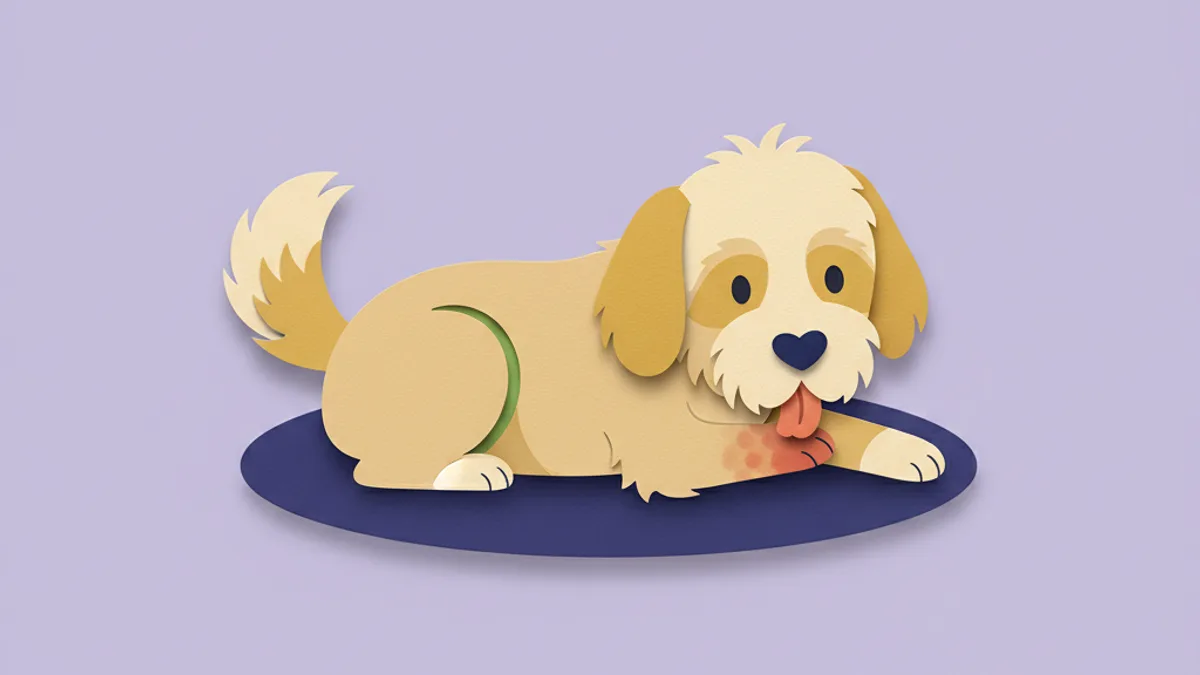
It's the sound every dog owner knows: the steady, wet lick-lick-lick from the foot of the bed at midnight. A little paw-grooming is normal. But when your dog works at the same paw for minutes on end, night after night — sometimes until the fur turns rust-coloured or the skin goes raw — it's not a habit. It's a symptom.
Occasional paw licking is normal grooming behavior in dogs. However, when the licking is extreme and persistent, it's usually a sign there's an underlying problem.
This guide covers what that underlying problem usually is, the self-perpetuating cycle that makes paw licking so stubborn, and exactly what to do — including when it's time to see the vet.
The number one cause: allergies
Paws are allergy magnets. They're in constant contact with grass, pollen and floors, they have lots of sensitive skin, and they're easy for a dog to reach. So when an allergic dog gets itchy, the feet are often where it shows first and worst.
Those allergies will cause the dog to have very itchy feet, and the chewing and licking leads to trauma and often infection.
Three kinds of allergy drive paw licking:
- Environmental allergies (atopic dermatitis) — pollens, grasses, moulds and dust mites. Paws that get itchy after walks, or worse in certain seasons, point this way.
- Food allergies — an ingredient the dog reacts to; often year-round, and frequently paired with itchy ears or a grumbly gut.
- Flea allergy — a reaction to flea saliva; intensely itchy, and common even in dogs on patchy flea control.
When the trigger is environmental, the usual suspects are well mapped by allergy testing — and they're mostly things floating around the home and garden.
Among environmentally-allergic dogs, mould, house dust and dust mites are the most frequent positive reactions on intradermal testing — a reminder that much of the trigger is indoors and year-round. Source: Intradermal allergy testing study (PMC, 2024)
One tell-tale sign of chronic licking is rust-coloured staining on white or pale fur between the toes. That isn't the paw 'bleeding' — it's porphyrin pigment in saliva that stains fur over time, and it's a reliable flag that the licking has been going on for a while.
The vicious cycle: itch → lick → infection → more itch
Here's why paw licking so rarely fixes itself: the licking causes a second problem that makes the first one worse. Repeated licking keeps the paw warm and wet and wears down the skin's protective barrier — perfect conditions for yeast and bacteria to move in.
There's a high likelihood your dog will get a secondary bacterial or yeast infection. It's important to treat that because this causes a lot of the itchiness, inflammation, and pain the pet is feeling.
Now the infection itself itches and aches, so the dog licks more, which feeds the infection, which itches more. Vetster and dermatology clinics describe this as a self-perpetuating loop — and it's the reason 'just stopping the licking' never works on its own. You have to treat the infection and the allergy underneath it to break the cycle.

A yeast-infected paw has a recognisable signature: greasy, red-brown skin between the toes, often with a distinctive musty or 'corn-chip' smell. It needs veterinary treatment — it won't clear on its own, and treating it makes your dog dramatically more comfortable while you sort out the root cause.
The other causes worth ruling out
Allergies lead the list, but a few other things make dogs target their paws — some need quick action:
Injury or something stuck
Sudden, intense licking of one paw often means a local problem: a cut or torn nail, a burr or grass seed (awn) lodged between the toes, a thorn, a stone bruise, a burn from hot pavement, or an insect sting. Grass seeds in particular can burrow into the skin and cause a painful swelling — check between the toes and pads, and see a vet if you find a wound or can't find the cause.
Parasites
Mites (including Demodex and the intensely itchy Sarcoptes) and fleas can all drive paw and leg chewing. These need veterinary diagnosis and treatment.
Pain — including arthritis
Dogs sometimes lick a paw or wrist that hurts, not just one that itches. Older dogs with arthritis, or a dog with a sore joint, may lick over the painful area. If your dog targets the same spot and is also slowing down or stiff, mention it to your vet.
Anxiety or boredom
Repetitive licking can become a stress or boredom behaviour — but this is a diagnosis of exclusion. Because medical causes are so much more common, vets rule those out first rather than assuming it's behavioural. Don't write off a licking dog as 'just anxious' until the skin, paws and allergies have been checked.
When to see the vet
Book a visit if you see any of these:
- Licking that's daily, prolonged, or keeps you (or your dog) up at night.
- Red, swollen, smelly or greasy skin, or rust-coloured staining between the toes.
- Limping, a visible wound, swelling, or sudden fixation on one paw.
- Hair loss, sores, or the paw getting worse over days.
- Any sign of pain when you touch the foot.
Your vet will examine the paw, look for infection and parasites, and start untangling the cause. If allergies are suspected, they'll often treat any infection first to get your dog comfortable — which also makes the next steps easier to read.
What you can do at home (and what not to)
Supportive steps while you work with your vet:
- Check the paw in good light — between every toe and pad — for seeds, cuts or stuck objects.
- Wipe paws after walks with a clean damp cloth to remove pollen and allergens.
- Keep flea control current, year-round.
- Don't apply human creams (many are toxic if licked) and don't use a cone as a long-term fix — it stops the licking but not the cause.
- Note the pattern — which paw(s), what time of year, any link to walks, food or rooms — and bring it to your vet.
If it turns out to be food
If your vet suspects a food allergy — common when the itch is year-round or paired with ear infections — the next step is an elimination diet trial: a single novel-protein or hydrolysed diet for 8–12 weeks, then a re-challenge. As Tufts' Dr. Lisa Freeman stresses, that trial only works if you control everything your dog eats, so it's worth doing once, properly. Australia's Animal Dermatology Clinic and clinics worldwide rely on the same approach to confirm a dietary trigger.
See what itchy-paw signs look like and where they fit on the body map — then start a guided trial if food is in the frame.
Map your dog's itch freeFrequently asked questions
Why does my dog keep licking his paws?
The most common reason is allergies — environmental, food, or flea — which make the paws itchy. Licking then damages the skin and often triggers a secondary yeast or bacterial infection that itches even more, creating a cycle. Other causes include a stuck grass seed or injury, parasites, pain such as arthritis, and occasionally anxiety. Persistent licking should be checked by a vet.
Why is the fur between my dog's toes turning rust-coloured?
That reddish-brown staining is from porphyrin pigment in saliva, deposited by chronic licking. It's a reliable sign your dog has been licking the paw for a while, usually because something itches — most often an allergy.
Should I put a cone on my dog to stop the paw licking?
A cone can prevent further damage short-term, but it doesn't treat the cause — your dog will resume once it's off. The goal is to find and treat the underlying problem (allergy, infection, injury) with your vet, not just block the behaviour.
Can food allergies cause paw licking in dogs?
Yes. Food allergies are one of the three allergy types that make paws itchy, and they're more likely when the licking is year-round or comes with recurrent ear infections or gut signs. An elimination diet trial is the way to confirm a food trigger.
Experts & sources cited
Every quote in this article is real and links to its original source. ThePawcess is not a veterinary practice — this is educational, not a diagnosis.
- Dr. Millie Rosales, board-certified veterinary dermatologistAmerican Kennel Club expert advice (pododermatitis) · USA
- Dr. Lisa M. Freeman, DVM, PhD, DACVIM (Nutrition)Cummings School of Veterinary Medicine at Tufts University (Petfoodology) · USA
- Dr. Frane Banovic, DVM, PhD, DECVDAssociate Professor of Dermatology, University of Georgia (Today's Veterinary Practice) · USA
- VetsterVeterinarian-reviewed pet health education · USA
- Animal Dermatology ClinicSpecialist veterinary dermatology referral, Australia · Australia