
We tend to think of seasonal allergies as a human thing — the spring sneezes and itchy eyes. But dogs get them too, just expressed differently. Where we get a runny nose, a dog gets itchy skin. If your dog starts scratching, licking their paws and shaking their ears around the same time every year, seasonal environmental allergies — atopic dermatitis — are a prime suspect.
You can't cure them, but you can absolutely manage them — and a little planning ahead of each flare season makes a big difference. Here's what's going on and a practical plan for the whole year.
What seasonal allergies look like in dogs
PetMD's Dr. Michelle Diener defines the condition clearly:
Seasonal allergies in dogs, also known as atopic dermatitis, occur when a dog's immune system mistakes harmless substances in the environment for threats.
The result is itch, not sniffles: scratching, licking (especially paws), face-rubbing, head-shaking, recurring ear and skin infections, and often a belly or armpits that go pink and irritated. The triggers are the classic airborne allergens:
Grass pollen, tree pollen, weed pollen, mold, dust mites and storage mites.
Is it really seasonal? (the key clue)
The most useful thing you can do is track when your dog flares. As dermatologist Dr. Frane Banovic notes, atopic dermatitis signs can be seasonal or, most commonly, non-seasonal. So:
- Flares only in spring/summer/fall, then calm in winter → classic seasonal (pollen) environmental allergy.
- Itchy all year, every month → points toward food allergy or indoor environmental allergens like dust mites.
- Seasonal at first, then year-round over time → common as atopic dermatitis progresses.
Indoor allergens explain why some 'seasonal' dogs never fully settle: house dust and dust mites are present all year. On intradermal testing, those indoor triggers are among the most common of all:
Pollens drive the seasonal spikes, but indoor allergens like house dust and mites are extremely common — and present year-round, which is why some seasonally-allergic dogs never fully clear in winter. Source: Intradermal allergy testing study (PMC, 2024)
The year-round management plan
Managing seasonal allergies works best as layers, ramping up before and during your dog's known flare season. No single thing fixes it; together they keep flares small.
Reduce allergen contact
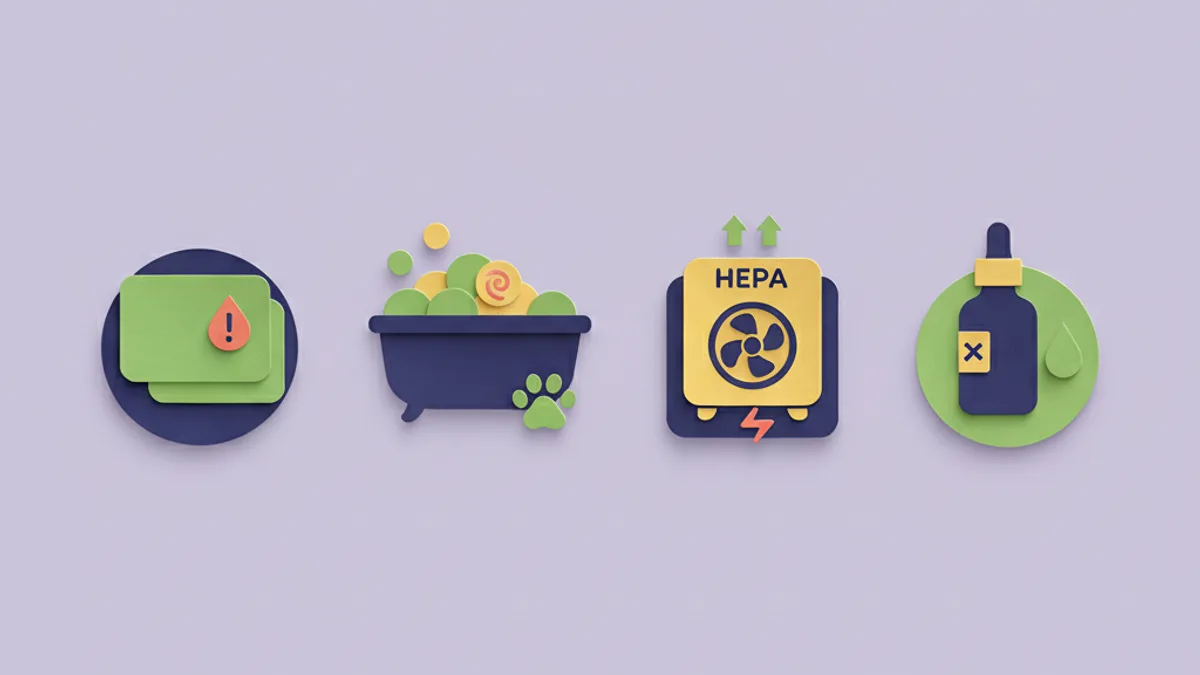
- Wipe down after walks — a damp cloth over paws, legs and belly removes pollen before it's licked in.
- Bathe more often during flares — frequent bathing physically washes allergens off the coat (use a vet-recommended gentle or medicated shampoo, and follow their guidance on frequency).
- Manage the indoor environment — HEPA air filters, regular vacuuming, and washing bedding cut dust and mite exposure.
- Avoid peak pollen — walk earlier or later in the day during high-pollen periods where you can.
Support the skin
- Ask your vet about omega-3s to support the skin barrier over time.
- Keep ears clean on a vet-advised routine — ears are a frequent flare site and routine care reduces infections.
- Soothe gently — see soothing your itchy dog at home for safe measures (and what to avoid).
Use veterinary treatment for the flares
When environmental management isn't enough, your vet has effective tools — fast-acting anti-itch medications and, for the longer term, immunotherapy aimed at the underlying allergy. We cover how these differ in Apoquel vs. Cytopoint vs. immunotherapy. Per the 2023 AAHA allergic skin disease guidelines, managing atopic dermatitis is usually a combination approach, tailored to the individual dog.
Don't forget: flea control and the food question
Two things round out the picture. First, keep flea control going year-round — flea allergy stacks on top of seasonal allergy and makes everything worse. Second, if your 'seasonal' dog is actually itchy all year, it may not be purely seasonal at all: food allergy and indoor allergens can masquerade as a season that never ends. That's worth investigating with your vet, including a food trial if warranted. (See food vs. environmental allergies to tell them apart.)
Log flares month by month to reveal your dog's pattern — then build a year-round plan with your vet.
Track the seasons freeFrequently asked questions
Can dogs have seasonal allergies?
Yes. Dogs get seasonal environmental allergies (atopic dermatitis), but unlike people they mainly show itchy skin — scratching, paw licking, ear infections and rashes — rather than sneezing. Triggers include tree, grass and weed pollens, plus mould and dust mites.
How do I know if my dog's allergies are seasonal or year-round?
Track when the itching happens. Flares only in spring, summer or fall that calm in winter suggest seasonal (pollen) allergy. Itching every month of the year points more toward food allergy or indoor allergens like dust mites. Many dogs start seasonal and become year-round over time.
How can I manage my dog's seasonal allergies?
Use layered management: reduce allergen contact (wipe paws after walks, bathe more during flares, use HEPA filters and wash bedding), support the skin (omega-3s, routine ear care), keep flea control current, and use vet-prescribed anti-itch treatment or immunotherapy for flares. You can't cure them, but you can keep flares small.
What months are worst for dog allergies?
It varies by region and by what your dog reacts to, but spring (roughly March–May) and fall (roughly September–November) are common peaks for pollens. Tracking your individual dog's flares is the best way to know their personal 'bad months' and prepare ahead of them.
Experts & sources cited
Every quote in this article is real and links to its original source. ThePawcess is not a veterinary practice — this is educational, not a diagnosis.
- Dr. Michelle Diener, DVMPetMD — seasonal allergies in dogs (reviewed by Dr. Molly Price, DVM) · USA
- Dr. Frane Banovic, DVM, PhD, DECVDAssociate Professor of Dermatology, University of Georgia (Today's Veterinary Practice) · USA
- Intradermal allergy testing studyEnvironmental allergens in canine allergic dermatitis (PMC, 2024) · USA
- AAHA2023 AAHA Management of Allergic Skin Diseases in Dogs and Cats Guidelines · USA