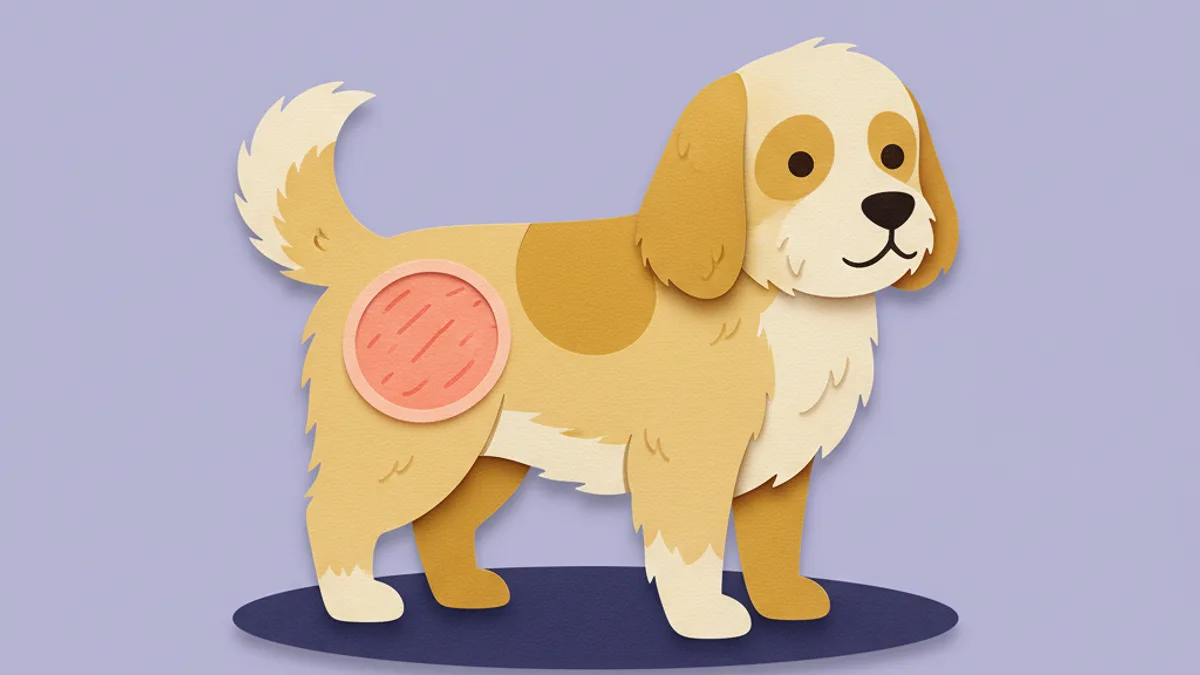
A bald patch on your dog stops you in your tracks. Is it stress? A disease? Something contagious? Hair loss — alopecia — is one of the more anxiety-inducing things to spot, partly because it has so many possible causes. The reassuring news is that the pattern of the hair loss is a genuinely useful clue, and the single most common reason behind it is something very treatable: allergies.
Here's how to read what you're seeing, the main causes from most to least common, and when it's time for the vet.
The first question: is your dog itchy?
Before anything else, watch whether your dog is itchy. This one observation splits the causes into two very different groups, and it's the first thing a vet will want to know. As the AKC's Dr. Jerry Klein explains:
The appearance of alopecia can vary depending on the underlying cause. Some conditions lead to pruritis (scratching), whereas other conditions lead to hair loss with minimal scratching.
Itchy hair loss usually means the hair is being removed by the dog — scratched, licked or chewed out — pointing to allergies, parasites or infection. Non-itchy hair loss, especially if it's even and symmetrical on both sides with fairly normal-looking skin, points more toward a hormonal or internal cause. Keep that fork in mind as we go.
Cause #1: allergies (the most common)
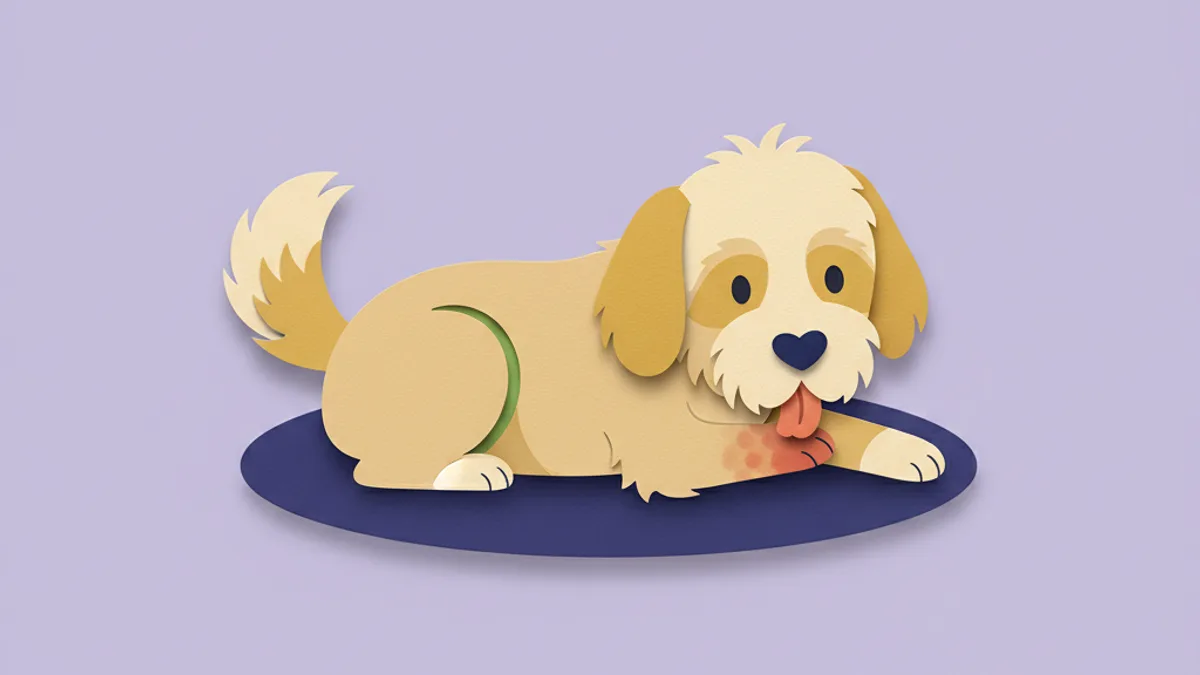
By a wide margin, the most common reason dogs lose hair is allergic skin disease — and the mechanism is mechanical. An itchy dog scratches, licks and chews the same spots until the fur is worn away and the skin is damaged. Dr. Klein describes the everyday version:
Dogs with allergies may be prone to scratching their ears or bellies or chewing on their paws, resulting in cuts and abrasions.
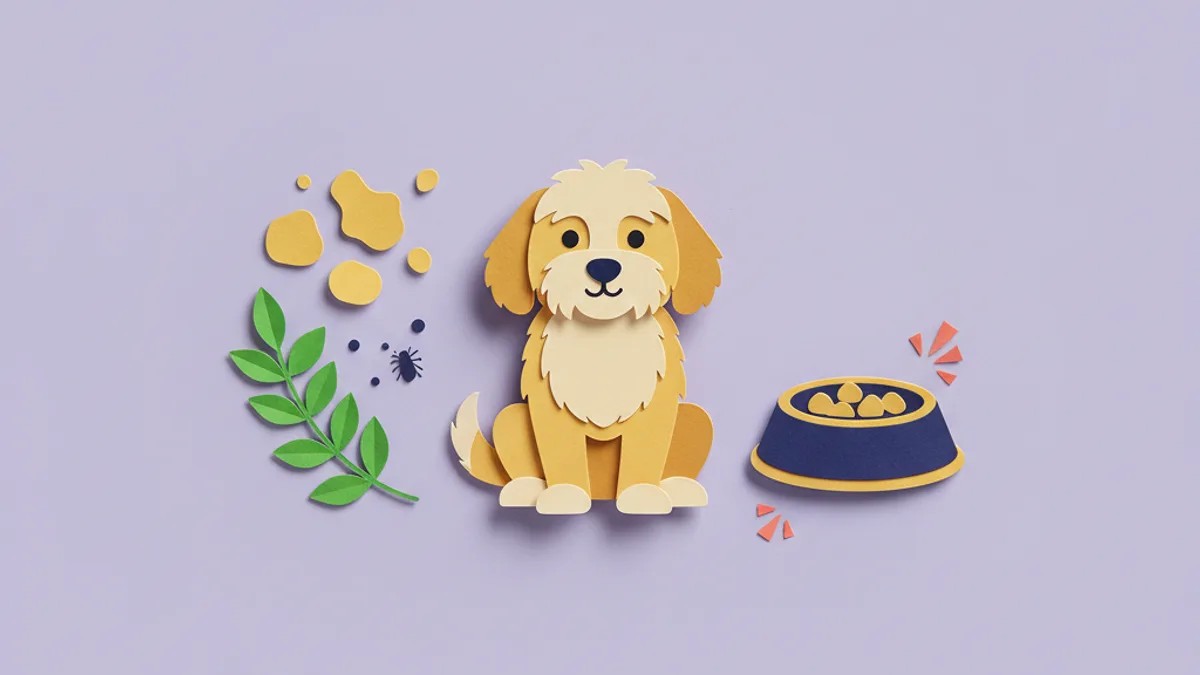
So the bald patches of an allergic dog tend to show up exactly where they can reach to scratch and lick: the flanks, belly, paws, around the ears and the base of the tail. The three allergy types — environmental, flea and food — can all do it. When food is involved, the usual trigger proteins are the everyday ones:
Allergic hair loss is the fur being scratched and licked away. Where food allergy is the driver, these everyday proteins lead — confirmed by an elimination trial, not guesswork. Source: Mueller & Olivry, BMC Veterinary Research (2016)
Cause #2: parasites
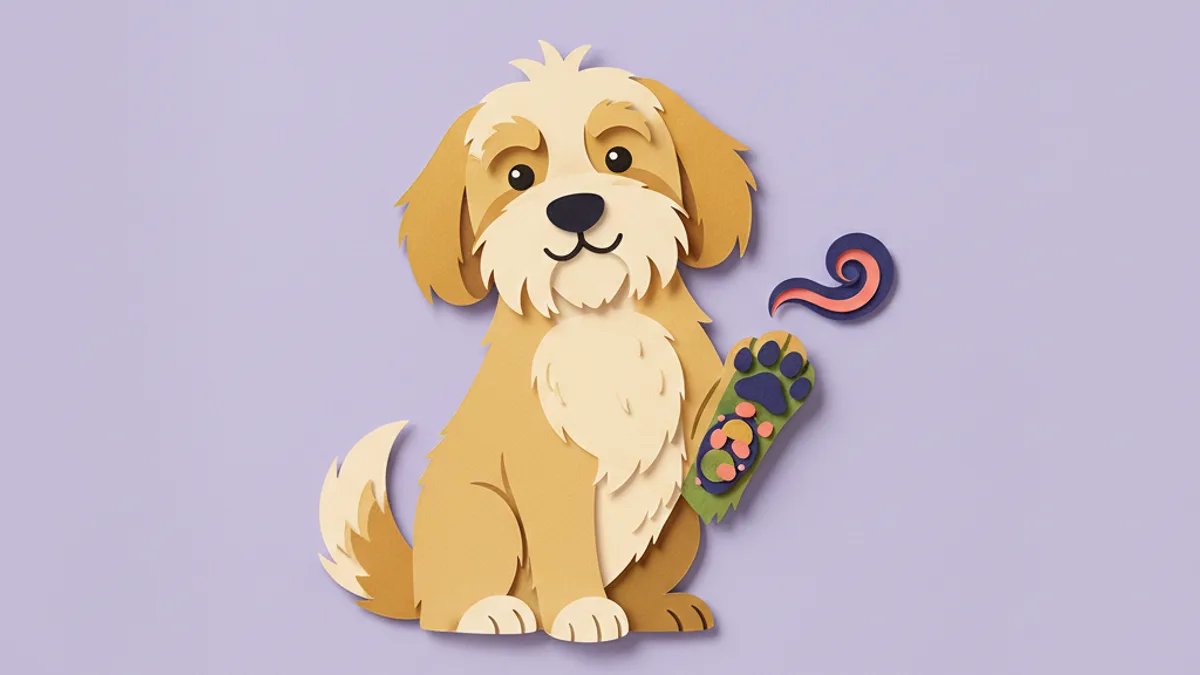
Parasites are a classic cause of itchy hair loss. Fleas (and flea allergy) drive chewing and fur loss, especially around the rump and tail base. Mites cause mange: Demodex (often patchy hair loss, sometimes around the eyes and muzzle) and Sarcoptes (intensely itchy, contagious). These need veterinary diagnosis — usually a simple skin scrape — and specific treatment.
Cause #3: skin infections
Bacterial infections (pyoderma) and yeast overgrowth — themselves often secondary to allergies — cause red, inflamed skin, pustules and hair loss. Ringworm is different: it's a fungal infection (not a worm) that classically causes circular bald patches with scaly skin, and it's contagious to other pets and people, so it's worth ruling out.
Cause #4: hormonal (the non-itchy, symmetrical pattern)
This is the other branch. When hair loss is symmetrical (mirror-image on both sides), the skin looks fairly normal, and the dog isn't especially itchy, hormones move up the list. Dr. Klein notes some dogs are:
Prone to developing endocrine disorders, such as Cushing's disease or hypothyroidism, both of which can cause hair thinning or hair loss.
Hypothyroidism (an underactive thyroid) is among the most common hormonal conditions in middle-aged dogs and often brings a dull, thinning coat along with weight gain and low energy. These are diagnosed with blood tests, not skin scrapes — another reason the itchy-vs-not distinction matters so much for pointing the vet in the right direction.
Other causes worth knowing
- Pressure sores / calluses — bald, thickened skin over elbows and hocks from lying on hard surfaces.
- Post-clipping or scar alopecia — hair slow to regrow after grooming or over a scar.
- Seasonal flank alopecia — symmetrical, often seasonal hair loss in certain breeds.
- Stress or over-grooming — possible, but a diagnosis of exclusion after medical causes are ruled out.
- Poor nutrition — a genuinely unbalanced diet can dull and thin the coat.
When to see the vet — and what they'll do
Any hair loss that's spreading, persistent, itchy, sore, smelly, or paired with other signs (weight change, lethargy, increased thirst) warrants a vet visit. Bring the pattern: where the bald spots are, whether your dog is itchy, when it started, and any seasonality. Your vet may use a skin scrape (for mites), cytology (for yeast/bacteria), a fungal test (for ringworm), or blood tests (for hormones) to find the cause.
If allergies are behind it — the most likely scenario for an itchy dog — the work-up includes flea control, an environmental assessment, and, where food is suspected, an elimination diet trial. As Tufts' Dr. Lisa Freeman stresses, that trial only works if you control everything your dog eats. Treat the cause and, in most allergic cases, the coat grows back.
See what allergic coat and skin signs look like on the body map, and run a guided food trial if the pattern points to diet.
Map the signs & start freeFrequently asked questions
Why is my dog losing hair in patches?
The most common reason is allergic skin disease — the dog scratches, licks and chews itchy areas until the fur is worn away, leaving patches on the flanks, belly, paws or tail base. Parasites (fleas, mange mites) and skin infections (including ringworm, which causes circular bald spots) are other common causes of patchy, often itchy, hair loss.
What does it mean if my dog has symmetrical hair loss but isn't itchy?
Even, mirror-image hair loss with fairly normal skin and little itching points more toward a hormonal (endocrine) cause, such as hypothyroidism or Cushing's disease, rather than allergies or parasites. These are diagnosed with blood tests, so it's important to see your vet.
Can food allergies cause hair loss in dogs?
Indirectly, yes. Food allergies make a dog itchy, and the resulting scratching, licking and chewing wears the hair away. The hair loss is a consequence of the self-trauma. An elimination diet trial is used to confirm a food trigger.
Will my dog's hair grow back?
In most allergic, parasitic and infectious cases, once the underlying cause is treated and the self-trauma stops, the hair regrows. Some causes (like scarring or certain hormonal conditions) are more variable. Your vet can advise based on the specific diagnosis.
Experts & sources cited
Every quote in this article is real and links to its original source. ThePawcess is not a veterinary practice — this is educational, not a diagnosis.
- Dr. Jerry Klein, DVMChief Veterinary Officer, American Kennel Club · USA
- Merck Veterinary ManualHair loss (alopecia) in dogs (peer-reviewed reference) · USA
- Mueller & OlivryBMC Veterinary Research — common food allergen sources in dogs (2016) · USA
- Dr. Lisa M. Freeman, DVM, PhD, DACVIM (Nutrition)Cummings School of Veterinary Medicine at Tufts University (Petfoodology) · USA