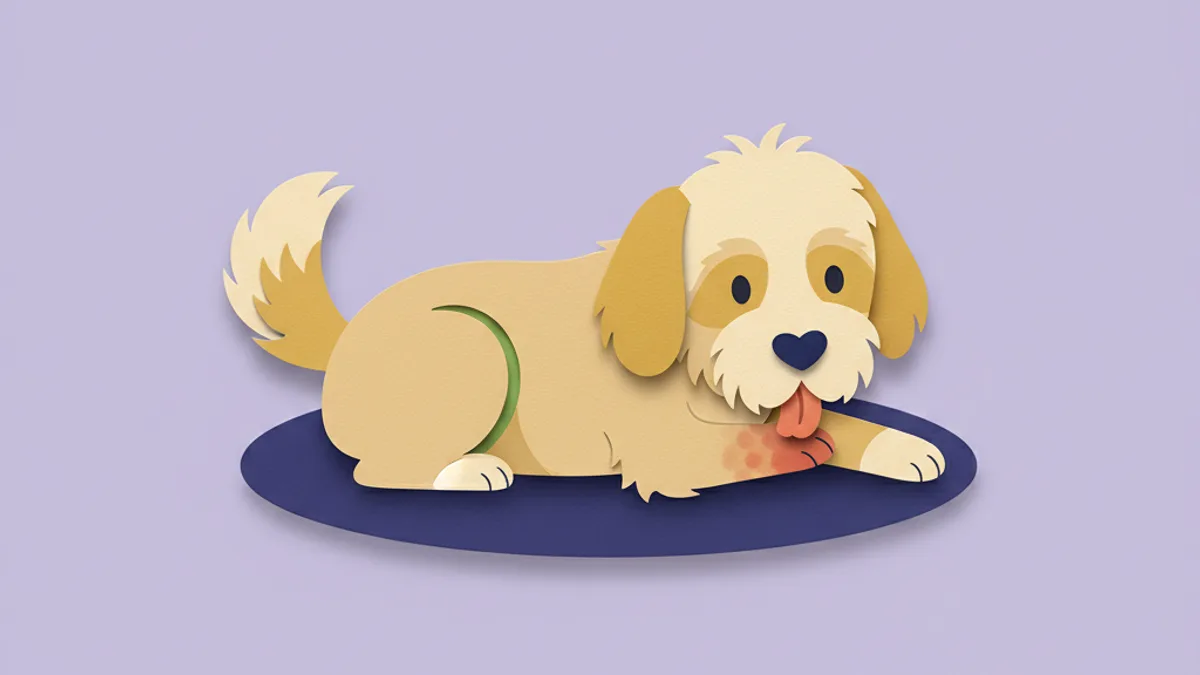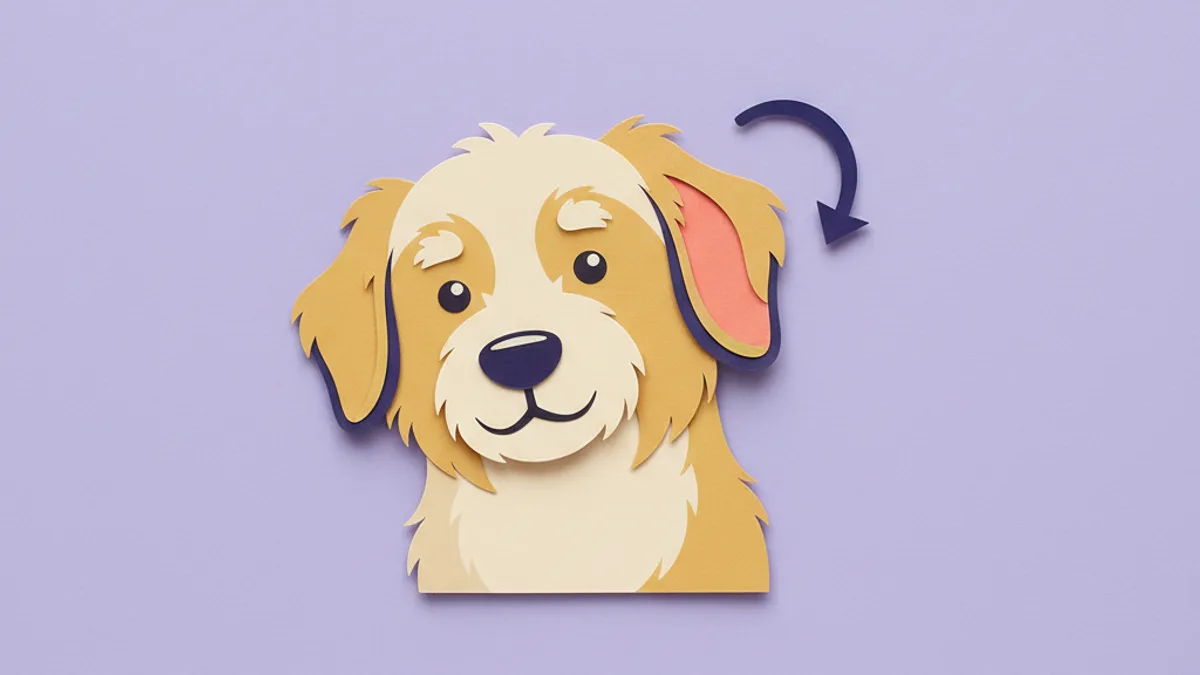
You've noticed it: a distinctive musty, slightly cheesy smell coming off your dog's paws or ears, skin that's gone greasy and red-brown, and licking or scratching that just won't quit. That's the signature of a yeast infection — an overgrowth of a yeast called Malassezia that lives naturally on dog skin. The infection itself is very treatable. But the question that actually matters is why it happened — because for most dogs, yeast is a symptom of something deeper.
What a yeast infection actually is
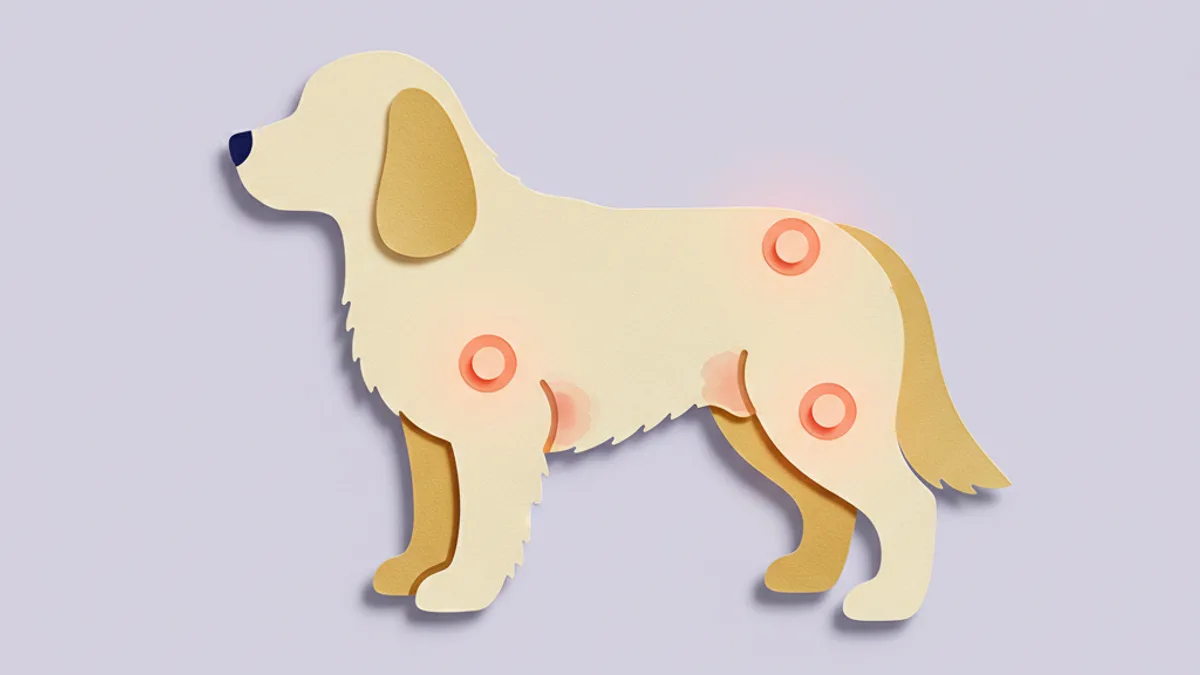
Malassezia yeast is a normal resident of healthy dog skin, kept in check by the skin's barrier and immune system. A yeast 'infection' (yeast dermatitis) is what happens when that balance tips and the yeast multiplies out of control — usually in warm, moist spots: between the toes, inside the ears, in skin folds, the armpits and groin. As the yeast overgrows, it inflames the skin, which itches, which leads to more licking and moisture, which feeds more yeast.
The allergy connection (why it keeps coming back)
Here's the insight that changes everything: yeast overgrowth is almost always secondary. Something disrupts the skin barrier first — and far and away the most common 'something' is allergy. Veterinarian Dr. Amy Attas puts the pattern plainly:
Dogs with allergies tend to get a lot of yeast infections on their feet, their skin, and in their ears.
Allergies — whether to food, flea saliva or environmental triggers — inflame the skin and break down its protective barrier, handing the yeast exactly the conditions it needs. Itchy paws from environmental allergy, for instance, get licked, stay damp, and turn into a yeasty paw infection. That's why Dr. Attas is blunt about what real success requires:
That's the key thing here, if we don't address allergies, we're not going to get these dogs better.
When the trigger is environmental, the usual offenders are the things floating around the home and garden — which keeps the skin inflamed year-round and the yeast coming back:
Where environmental allergy drives the skin inflammation behind yeast overgrowth, mould and house dust mites are the most frequent triggers on intradermal testing. Food allergy and fleas are the other common drivers. Source: Intradermal allergy testing study (PMC, 2024)
How to recognise a yeast infection
Yeast has a fairly recognisable signature:
- Smell — a musty, sour, 'corn-chip' or cheesy odour, often from the paws or ears.
- Greasy, red-brown skin — especially between the toes, in folds, armpits and groin.
- Itching and licking — paws that are constantly licked (often with rust-coloured saliva staining), and head-shaking with ear involvement.
- Thickened, darkened skin — in chronic cases the skin can become leathery and hyperpigmented ('elephant skin').
- Hair loss over affected areas from the constant licking.
It's worth noting these signs overlap with bacterial infections, and the two often occur together — which is why a vet diagnosis matters rather than guessing.
How it's diagnosed and treated
Diagnosis is quick: your vet takes a sample from the skin or ear and looks at it under the microscope (cytology) to see the characteristic yeast. Treatment then runs on two tracks:
- Clear the yeast — for localised or mild cases and ears, topical antifungals: medicated shampoos, wipes, sprays or ear products. For widespread or deep infections, oral antifungal medication may be prescribed.
- Treat the underlying cause — flea control, an environmental allergy work-up, and/or a food trial, depending on what's driving it. Without this step, the yeast simply returns.
Medicated shampoos work best when used correctly — your vet will advise the product and how long to leave it in contact with the skin. And resist the urge to reach for home 'yeast cures' from the internet; many (like vinegar rinses) can sting broken skin or simply don't work, and they delay real treatment.
If food allergy is the driver
When recurring yeast — especially in the ears and paws — comes with year-round itch, food allergy is high on the list. The way to confirm it is an elimination diet trial: a single novel-protein or hydrolysed diet for 8–12 weeks, then a re-challenge. As Tufts' Dr. Lisa Freeman stresses, that trial only works if you control everything your dog eats. Clear the yeast for comfort and find the trigger underneath — that's how you finally get off the treat-and-repeat treadmill. (Not sure if it's food or environment? See food vs. environmental allergies.)
See where yeast and allergy signs show up on the body map, and run a guided food trial if the pattern points to diet.
Map the signs & start freeFrequently asked questions
What causes yeast infections in dogs?
Yeast (Malassezia) lives normally on dog skin and overgrows when the skin's barrier is disrupted. The most common underlying cause is allergy — food, flea or environmental — which inflames the skin and creates the warm, moist, itchy conditions yeast thrives in. Excess moisture, skin folds and other skin conditions also contribute.
How do I know if my dog has a yeast infection?
Tell-tale signs include a musty, 'corn-chip' or cheesy smell, greasy red-brown skin (especially between the toes, in ears and skin folds), persistent licking and scratching, and in chronic cases thickened, darkened skin. A vet confirms it by examining a skin or ear sample under the microscope.
Why do my dog's yeast infections keep coming back?
Because yeast overgrowth is usually a symptom, not the root problem. If the underlying cause — most often an allergy — isn't addressed, the skin keeps getting inflamed and the yeast returns. Lasting control means treating the yeast and the allergy beneath it.
Can food allergies cause yeast infections in dogs?
Yes. Food allergy is one of the three allergy types (with flea and environmental) that commonly drive recurring yeast infections, particularly in the ears and paws. An elimination diet trial is the way to confirm a food trigger.
Experts & sources cited
Every quote in this article is real and links to its original source. ThePawcess is not a veterinary practice — this is educational, not a diagnosis.
- Dr. Amy Attas, VMDFounder, City Pets (New York) — via American Kennel Club · USA
- PetMDVeterinarian-reviewed — yeast infections in dogs · USA
- Intradermal allergy testing studyEnvironmental allergens in canine allergic dermatitis (PMC, 2024) · USA
- Dr. Lisa M. Freeman, DVM, PhD, DACVIM (Nutrition)Cummings School of Veterinary Medicine at Tufts University (Petfoodology) · USA