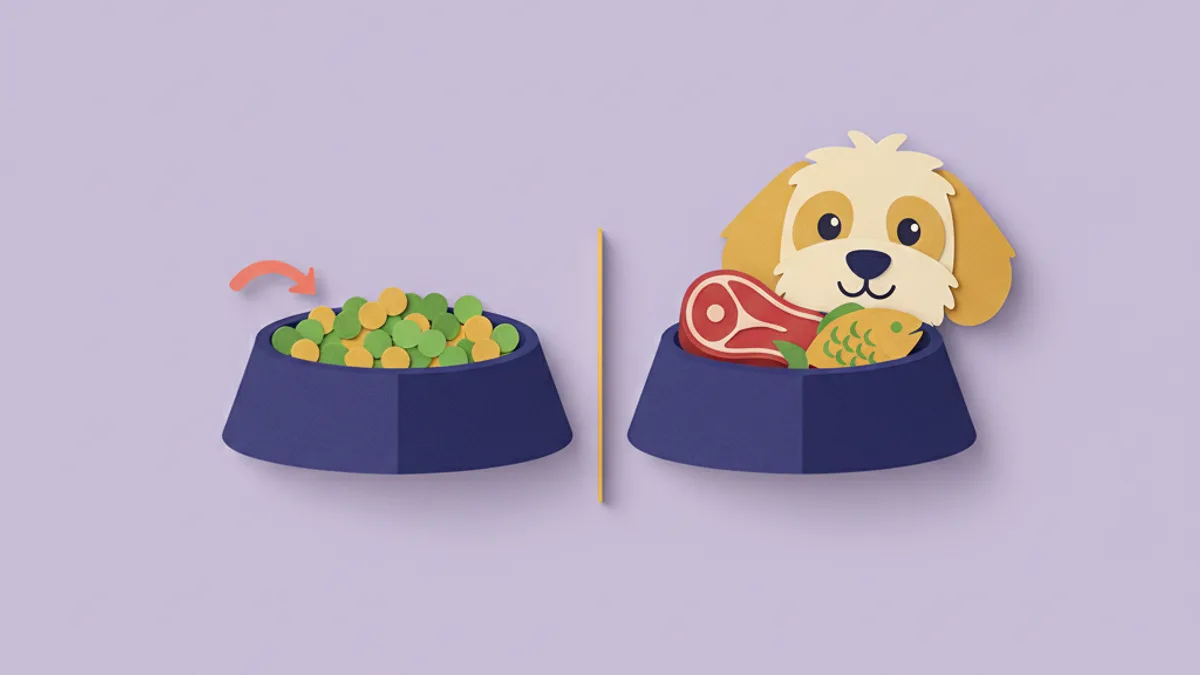
Walk down any pet-food aisle and 'grain-free' shouts from half the bags, usually wrapped in promises about allergies, itching and 'natural' eating. It's become received wisdom that grains are bad for dogs and that going grain-free will fix a scratchy coat. But when you line that belief up against the actual veterinary evidence, two things become clear: grains are rarely the allergen owners think they are, and grain-free diets have been at the centre of a serious heart-disease investigation. Let's separate the marketing from the science.
Myth #1: grains are the main cause of dog allergies
This is the big one, and the data is unusually clear. When researchers pooled hundreds of dogs with confirmed food allergies, the offending ingredients were overwhelmingly animal proteins. Grains sit well down the list.
Beef alone causes more confirmed reactions than all the listed grains combined. Corn and rice — the grains most often demonised — are near the bottom. Wheat is the only grain that ranks highly, and it's still beaten by three proteins. Source: Mueller & Olivry, BMC Veterinary Research (2016)
So a dog that's itchy 'because of grains' is, statistically, far more likely to be reacting to the beef or chicken in the very same bowl. Removing grains while keeping the problem protein changes nothing — which is exactly why so many grain-free switches disappoint. The only way to know your dog's real trigger is an elimination diet trial, not a label.
Myth #2: 'grain-free' means 'hypoallergenic'
These two words get used interchangeably in marketing, but they mean completely different things. 'Grain-free' simply means the recipe swapped grains for something else — usually peas, lentils, chickpeas or potatoes. It says nothing about the protein source, which is where most allergies actually live. A grain-free food built on beef or chicken is still loaded with the most common allergens.
A genuinely hypoallergenic trial diet is something else entirely: a hydrolysed or novel-protein veterinary diet, chosen with your vet and quality-controlled against contamination. 'Grain-free' off the shelf is not that.
The part the marketing skips: grain-free and heart disease
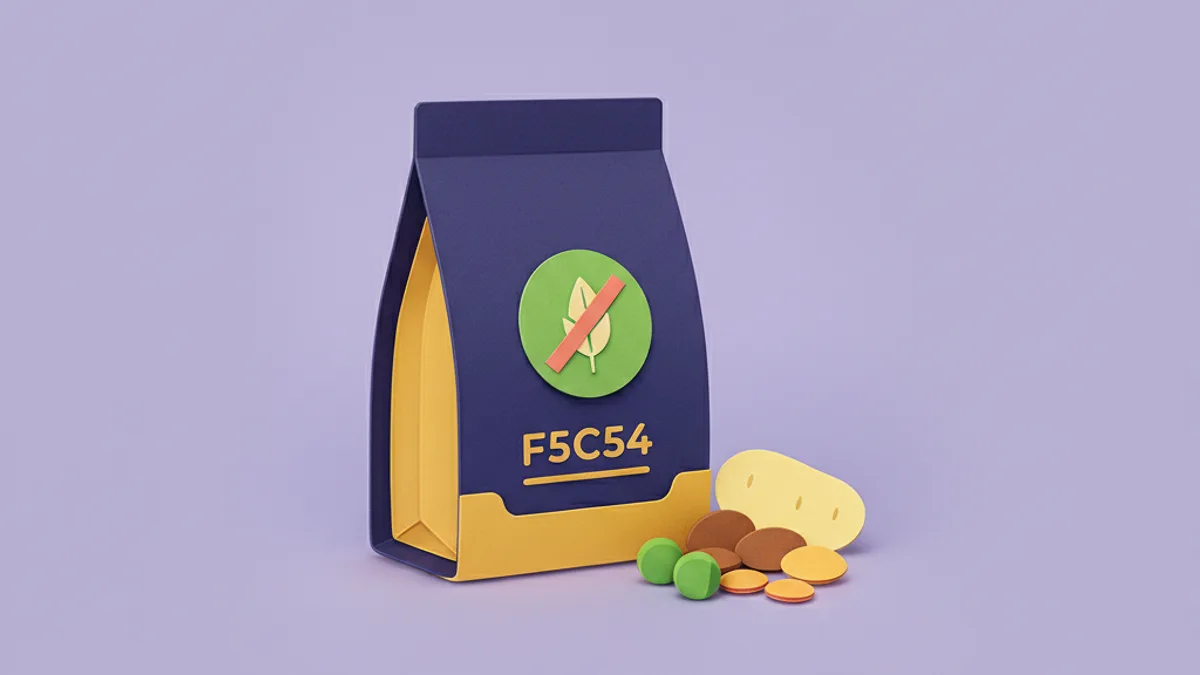
Here's where 'grain-free' stops being merely ineffective and becomes a genuine safety conversation. In July 2018 the U.S. Food & Drug Administration opened an investigation into a possible link between certain grain-free diets and dilated cardiomyopathy (DCM) — a serious disease where the heart muscle weakens and enlarges. As the AKC's Chief Veterinary Officer Dr. Jerry Klein summarised it:
The FDA is investigating a potential dietary link between canine dilated cardiomyopathy (DCM) and dogs eating certain grain-free dog foods.
Two things are important for balance here. First, the suspicion has centred not on the absence of grain but on what replaced it:
The foods of concern are those containing legumes such as peas or lentils, other legume seeds, or potatoes listed as primary ingredients.
Second, a definitive cause has not been proven:
At this time, there is no proof that these ingredients are the cause of DCM in a broader range of dogs, but dog owners should be aware of this alert from the FDA.
In other words: the science is still unfolding, no one is saying grain-free definitely causes heart disease, but the association was strong enough for the FDA to flag it and for veterinary nutritionists to urge caution. That's a long way from the 'grain-free is healthier' message on the bag.
So should you go grain-free?
For the vast majority of dogs, there's no benefit to choosing grain-free for its own sake — and given the open DCM question, it's a decision to make with your vet, not on marketing. A few honest takeaways:
- Itchy dog? Don't assume grains. The likely culprit is a protein — confirm it with an elimination trial, don't guess at the label.
- Dogs genuinely allergic to wheat exist — but that's diagnosed by trial, and it doesn't mean all grains are a problem.
- Choosing any diet? Prioritise a complete, balanced food from a company with strong nutritional expertise and quality control, and talk to your vet — especially before a grain-free or 'boutique' diet.
- Worried about heart disease? If your dog is on a grain-free or legume-heavy diet, raise the DCM question with your vet.
Tufts veterinary nutritionist Dr. Lisa Freeman — one of the researchers whose concerns helped prompt the FDA investigation — has long argued that diet choices should rest on evidence and nutritional expertise rather than ingredient buzzwords. For allergies specifically, the evidence points at proteins, and the answer comes from a proper trial.
Stop guessing at the label. Run a guided elimination trial and identify what your dog actually reacts to.
Find the real trigger — freeFrequently asked questions
Are grains a common allergen for dogs?
No — grains are a relatively uncommon dog allergen. In confirmed food-allergy cases, animal proteins like beef, dairy and chicken dominate. Wheat is the only grain that ranks highly, and corn and rice are near the bottom. An itchy dog is far more likely reacting to a protein than to grain.
Does grain-free dog food help with allergies?
Usually not. 'Grain-free' only removes grains and typically replaces them with peas, lentils or potato — it doesn't change the protein source where most allergies live. It is not the same as a hypoallergenic diet. The reliable way to find a food allergy is an elimination diet trial.
Is grain-free dog food linked to heart disease?
The FDA opened an investigation in 2018 into a possible link between certain grain-free diets and dilated cardiomyopathy (DCM). No definitive cause has been proven, and the concern has centred on diets with legumes (peas, lentils) or potatoes high in the ingredient list. If your dog eats such a diet, discuss it with your vet.
Should I feed my dog grain-free food?
For most dogs there's no inherent benefit to grain-free, and given the open DCM question it's a choice to make with your veterinarian rather than based on marketing. If you're chasing an allergy, confirm the trigger with a trial first — it's usually a protein, not grain.
Experts & sources cited
Every quote in this article is real and links to its original source. ThePawcess is not a veterinary practice — this is educational, not a diagnosis.
- Dr. Jerry Klein, DVMChief Veterinary Officer, American Kennel Club · USA
- Dr. Lisa M. Freeman, DVM, PhD, DACVIM (Nutrition)Cummings School of Veterinary Medicine at Tufts University (Petfoodology) · USA
- Mueller & OlivryBMC Veterinary Research — common food allergen sources in dogs (2016) · USA
- U.S. Food & Drug AdministrationFDA investigation: grain-free diets & canine DCM · USA