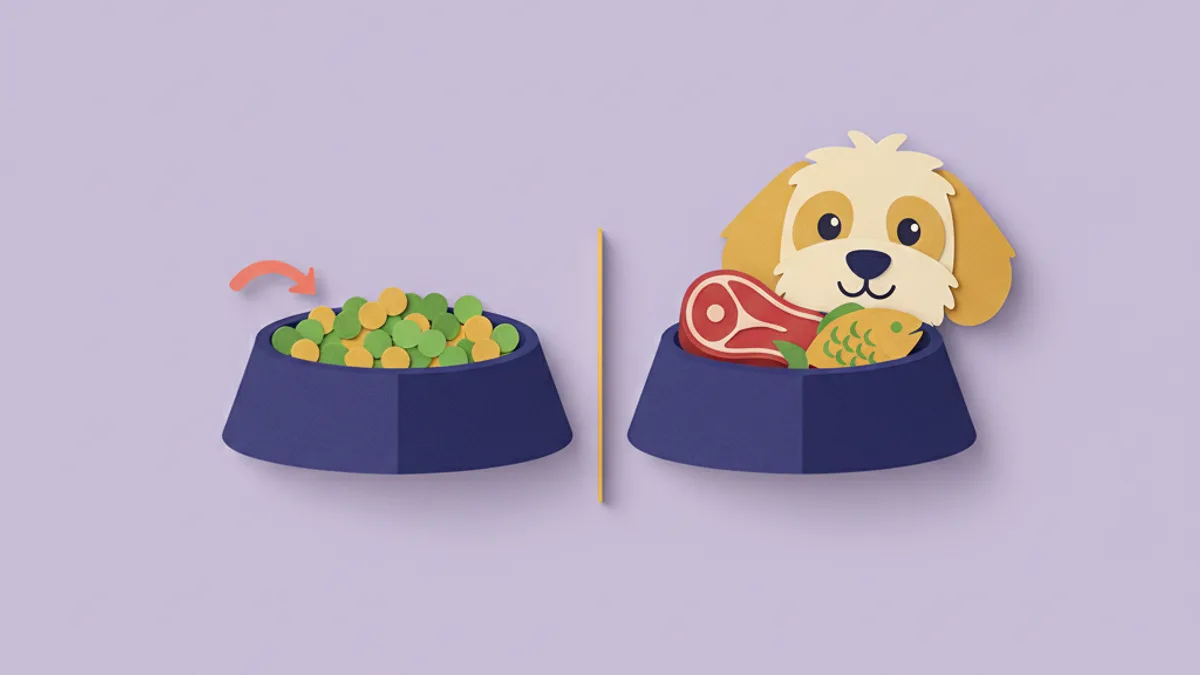
When you're running an elimination diet trial, a home-cooked diet has an obvious appeal: you control every single ingredient, so there's no factory cross-contamination and no mystery 'natural flavour' hiding a stray protein. For some dogs and some owners, a home-cooked trial diet is genuinely a great option. But it comes with a serious catch that the internet's endless recipes rarely mention — and getting it wrong can harm your dog while you're trying to help them.
Here's the honest picture: the real benefit, the real risk, and exactly how to cook for your dog's trial safely.
The upside: total control
A food trial lives or dies on strictness — a single stray protein can invalidate it. Commercial trial diets handle this with quality control, but home cooking gives you a different kind of certainty: you bought every ingredient, you know exactly what went in the pot, and there's no shared factory line. For a dog with an unusual set of confirmed safe foods, or one who won't eat prescription diets, a home-cooked trial diet your vet designs can be the thing that finally lets you run a clean trial. VCA describes home-cooked novel-ingredient diets as one of the legitimate routes for an elimination-challenge trial.
The catch nobody mentions: balance
Here's the part that should stop you before you grab a recipe off a blog. A dog's complete diet needs dozens of nutrients in the right amounts and ratios — calcium to phosphorus, specific vitamins, trace minerals, essential fatty acids. Throwing together 'chicken and rice and veg' reliably misses several of them. And this isn't a rare slip — it's the norm. When researchers evaluated large numbers of homemade dog-diet recipes, the results were sobering:
In a large analysis of home-prepared dog diets, only about 6% were potentially nutritionally complete; over half had ten or more nutrient imbalances. Good intentions don't equal a balanced bowl. Source: Stockman et al., home-prepared diet study (via dvm360)
Over weeks to months — exactly the length of an elimination trial — feeding an unbalanced diet can cause real nutritional harm, especially in growing puppies. So the very duration that makes a trial work is what makes an unbalanced homemade diet dangerous.
The fix: a board-certified veterinary nutritionist
The solution isn't to avoid home cooking — it's to get the recipe from the right source. A board-certified veterinary nutritionist (DACVN or equivalent) can formulate a home-cooked elimination diet that is both free of your dog's suspect proteins and nutritionally complete for the trial period. Your vet can refer you, or you can use a veterinary nutrition consulting service.
And then — this is the part owners underestimate — you have to follow it exactly. Tufts nutritionist Dr. Lisa Freeman found that good recipes fall apart in real kitchens over time:
In 2015, we published a study to determine how well owners adhered to home-cooked diet recipes a median of 1 year later. Shockingly, only 13% were still feeding the original nutritionally balanced diet recipe!
Swapping the oil, skipping 'just the supplement', changing the protein cut, or eyeballing quantities all quietly break the balance the nutritionist built. For a trial, those swaps also reintroduce variables that can ruin your result. The rule is simple: no ingredient is optional.
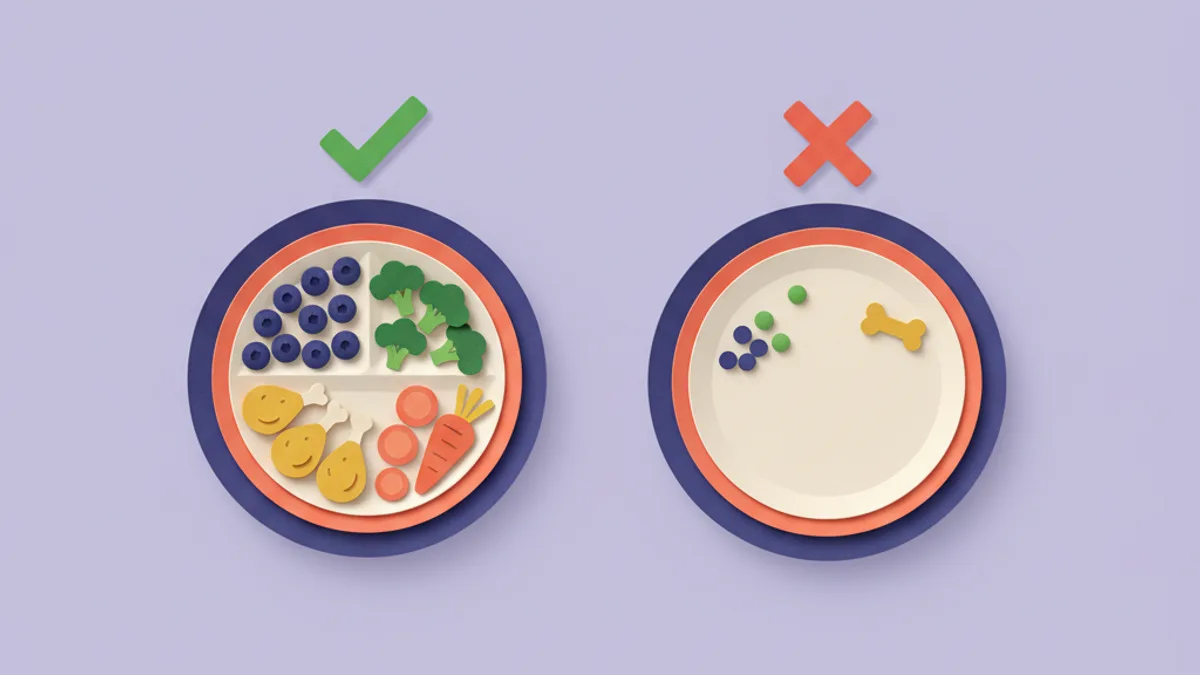
How to run a home-cooked trial properly
- Decide with your vet whether home-cooked is the right route for your dog (vs a prescription hydrolysed or novel-protein diet).
- Get a formulated recipe from a board-certified veterinary nutritionist that avoids your dog's previously-eaten proteins.
- Buy exactly what's specified — the named protein, carbohydrate, oil and the supplement(s) that make it complete.
- Cook and measure precisely — weigh ingredients; don't improvise or substitute.
- Feed it exclusively for 8–12 weeks — no treats, scraps, chews or flavoured meds (use trial-safe treats).
- Re-challenge with the old food afterward to confirm the diagnosis, then reintroduce ingredients one at a time.
As dermatologist Dr. Heng Tham notes, the trial only confirms a food allergy when signs resolve on the diet and return on re-challenge — so the diet has to be both clean (no stray proteins) and complete (no nutritional harm) across the whole trial.
Is home-cooked right for your dog?
- Maybe a good fit: dogs who refuse prescription diets, owners committed to precise cooking, or cases where a nutritionist recommends it.
- Often simpler: a veterinary prescription hydrolysed or novel-protein diet — complete by design and quality-controlled — covered in hydrolyzed vs. novel protein.
- Not a fit: DIY recipes from blogs or social media with no nutritionist input, or any plan you can't follow to the letter.
Home-cooked or prescription, ThePawcess tracks the weeks, catches slips, and builds the record your vet needs.
Run your trial — freeFrequently asked questions
Can I make my dog's elimination diet at home?
Yes, and it can be a good option because you control every ingredient — but only if the recipe is formulated by a board-certified veterinary nutritionist and followed exactly. Most DIY homemade recipes are nutritionally unbalanced, which is harmful over the weeks-to-months a trial lasts.
Are homemade dog diets nutritionally complete?
Usually not. In a large study of home-prepared dog diets, only about 6% were potentially complete, while over half had ten or more nutrient imbalances. That's why a recipe from a veterinary nutritionist — and following it precisely — is essential.
Is a home-cooked or prescription diet better for a food trial?
Both can work. A veterinary prescription hydrolysed or novel-protein diet is complete by design and quality-controlled against contamination, making it the simpler route for many. Home-cooked offers total ingredient control and suits dogs who won't eat prescription food — but it must be formulated by a nutritionist. Decide with your vet.
Why can't I just feed chicken and rice for the trial?
Two reasons. First, it's not nutritionally complete, so it can harm your dog over a multi-week trial. Second, chicken is one of the most common allergens, so it may be the very protein you should be avoiding. A trial diet needs to be both complete and free of your dog's suspect proteins.
Experts & sources cited
Every quote in this article is real and links to its original source. ThePawcess is not a veterinary practice — this is educational, not a diagnosis.
- Dr. Lisa M. Freeman, DVM, PhD, DACVIM (Nutrition)Cummings School of Veterinary Medicine at Tufts University (Petfoodology) · USA
- Stockman et al. (homemade diet study)Nutritional adequacy of home-prepared dog diets — via dvm360 · USA
- Dr. Heng L. Tham, DVM, DACVDBoard-certified veterinary dermatologist, Today's Veterinary Practice · USA
- VCA Animal HospitalsClinical client education — elimination-challenge diet trial · USA