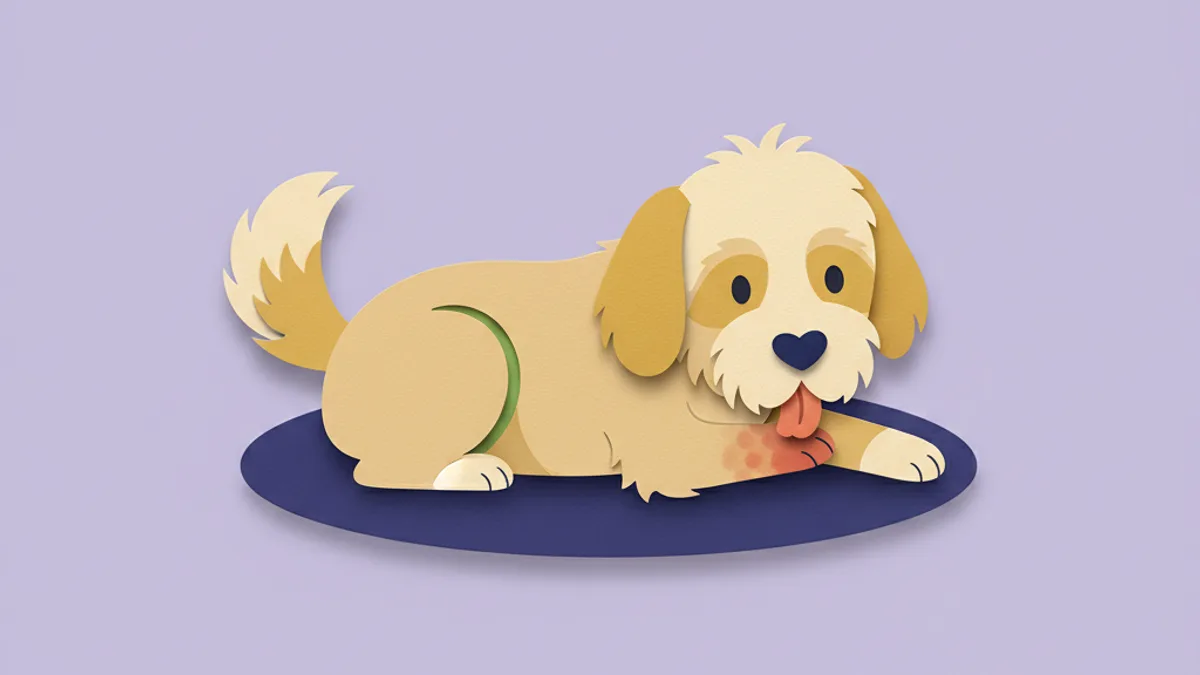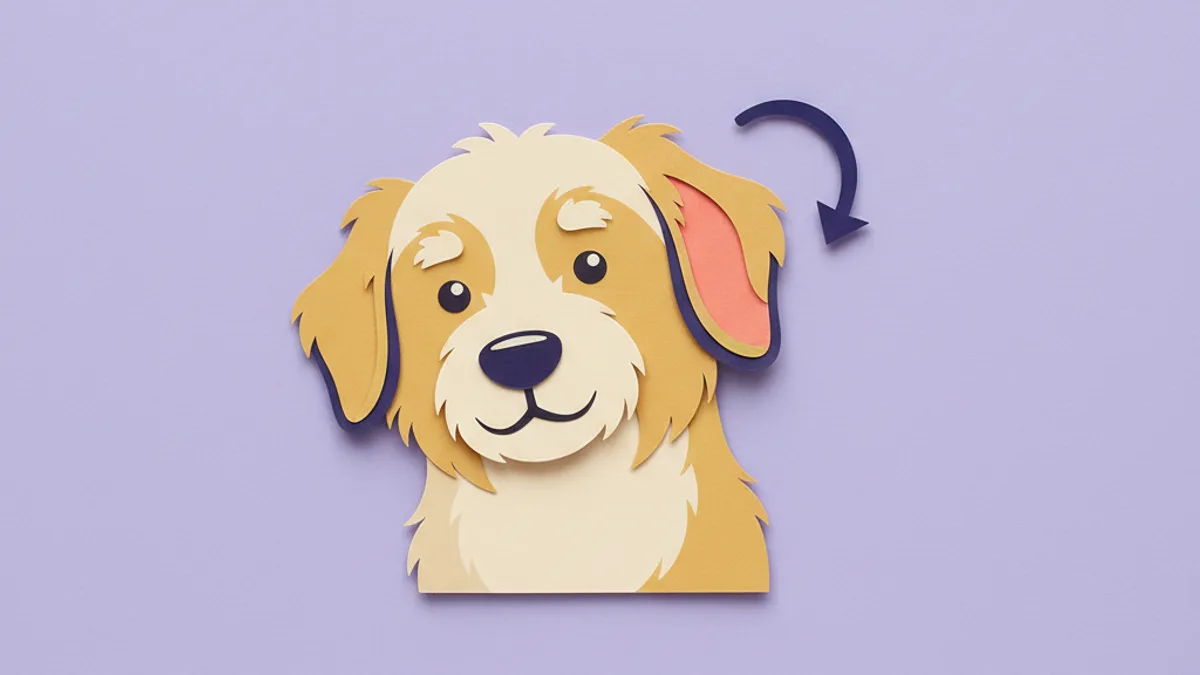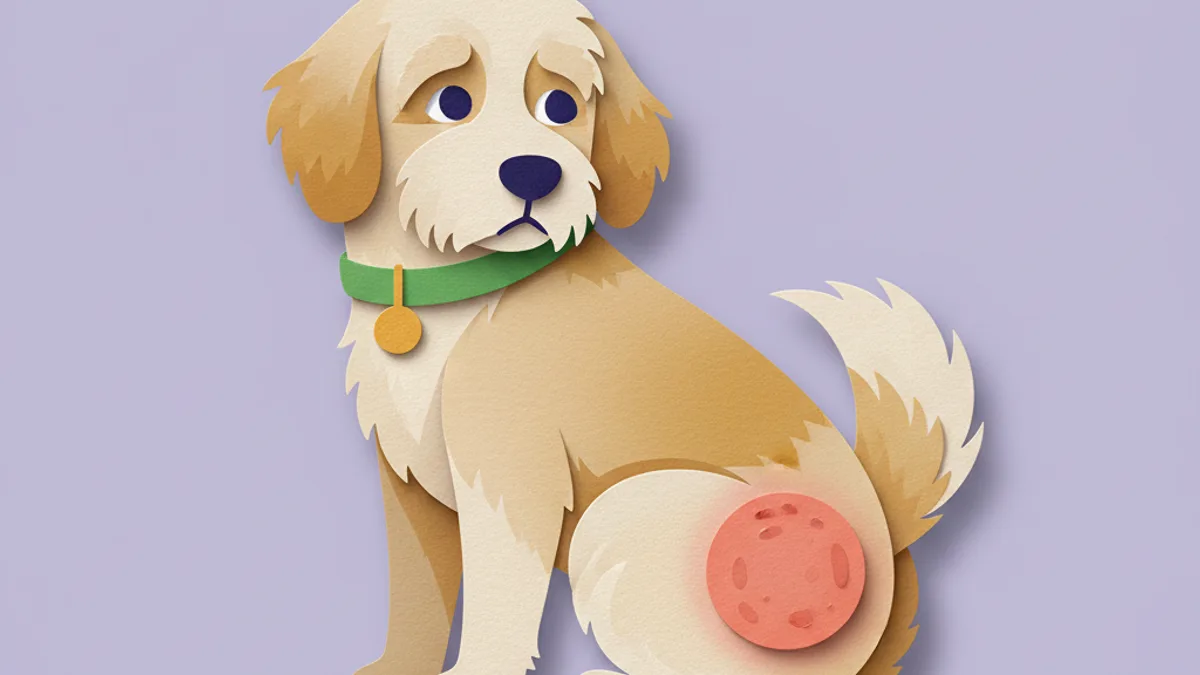
One minute your dog seems fine; a few hours later there's a red, wet, angry patch of skin — often on the cheek, neck or hip — that your dog won't leave alone. That's a hot spot, known medically as acute moist dermatitis, and it can develop frighteningly fast. The good news: hot spots are very treatable. The important part: a hot spot is a symptom, and the dogs that get them again and again are almost always telling you about an underlying allergy.
Here's what hot spots are, what sets them off, how they're treated, and how to stop the cycle of repeats.
What a hot spot actually is
A hot spot is a small area of skin that becomes rapidly inflamed and infected because the dog has traumatised it themselves. As MedVet dermatologist Dr. Lauren Pinchbeck describes it, a hot spot involves a rapid increase of bacteria on the skin surface that is worsened by self-trauma to the area.
A hot spot involves a rapid increase of a bacteria on the skin surface which is worsened by self-trauma to the area.
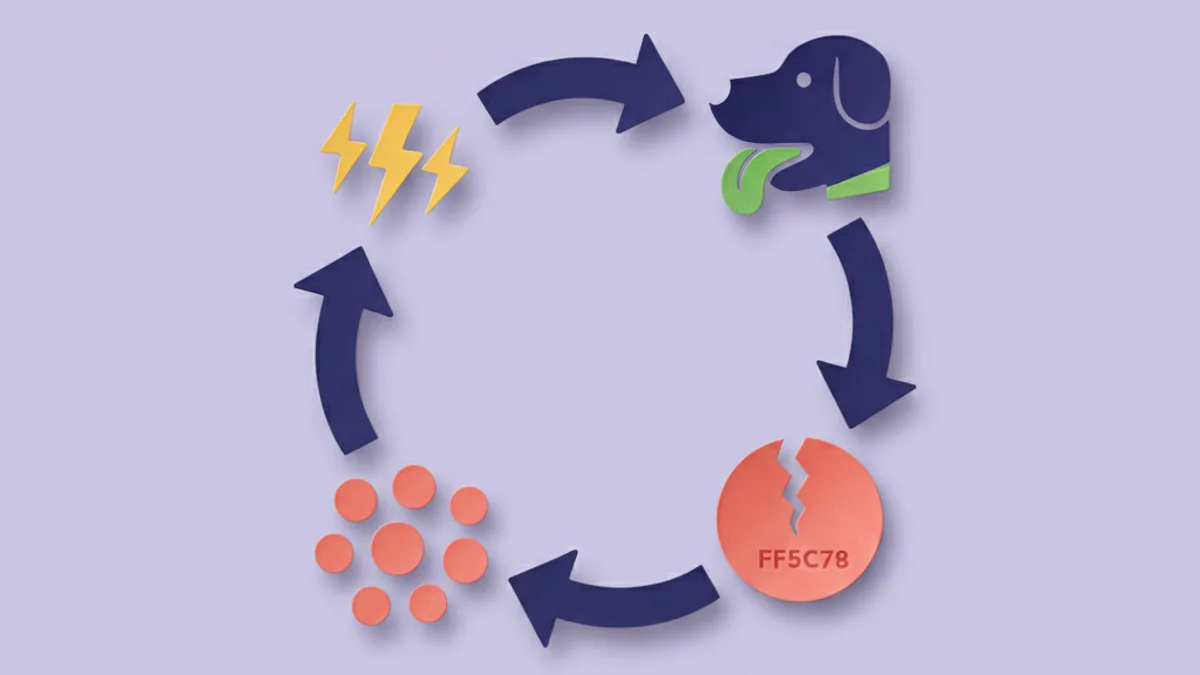
The loop is brutally fast: something itches → the dog licks, scratches or chews → that breaks the skin and traps moisture → bacteria multiply → it itches and hurts even more → the dog goes at it harder. Within hours you can have a raw, weeping, painful lesion. Hot spots are also more common in warm, humid weather and in thick- or long-coated dogs, where moisture sits against the skin.
What makes a dog itch in the first place
A hot spot doesn't appear out of nowhere — something starts the itch. The usual triggers:
- Flea allergy — the most common trigger of all. The Merck Veterinary Manual notes pruritus from flea allergy dermatitis is moderate to severe and the resulting licking, scratching and chewing can lead straight to acute moist dermatitis.
- Environmental allergy (atopic dermatitis) — pollen, dust mites, mould.
- Food allergy — an ingredient the dog reacts to.
- Ear infections and anal gland problems — dogs traumatise the skin near an itchy ear or rear.
- Trapped moisture or matting — after swimming or bathing, or under matted fur.
- A local irritant, sting, or something stuck in the coat.
Notice how many of those are allergies. That's the key to the recurring ones.
How hot spots are treated
Hot spots usually need veterinary treatment — they're painful, and they don't reliably clear on their own. Typical steps:
- Clip and clean — the fur over and around the spot is clipped (often well beyond the visible edge) and the skin gently cleaned with a mild antiseptic so it can dry and breathe.
- Treat the infection and inflammation — your vet may prescribe topical or oral medication to clear the bacterial infection and calm the itch and pain.
- Stop the self-trauma — a temporary cone or a light cover prevents further licking while it heals.
- Find and treat the trigger — flea control, ear treatment, or an allergy work-up so it doesn't simply come back.
Why yours keeps coming back
A one-off hot spot after a swim is one thing. But if your dog gets them repeatedly — or in the same spots, season after season — the hot spot is just the visible tip of an ongoing allergy. As Dr. Pinchbeck advises:
If this problem recurs often, your dog may benefit from a consultation with a veterinary dermatologist to definitively treat and identify the underlying cause.
If food allergy is part of the picture, the triggers are the everyday proteins — and a hot spot is one more reason to investigate the diet rather than just patch the skin:
Where allergy underlies recurring hot spots and food is suspected, these everyday proteins are the most common culprits — pinpointed with an elimination trial, not guesswork. Source: Mueller & Olivry, BMC Veterinary Research (2016)
The path forward depends on the trigger: rock-solid flea control for flea allergy, an allergy work-up for atopy, and — if food is suspected — an elimination diet trial. As Tufts' Dr. Lisa Freeman stresses, that trial only works if you control everything your dog eats. (Not sure whether it's food or environment? See food vs. environmental allergies.)
See what allergic skin signs look like on the body map, and run a guided food trial if the pattern points to diet.
Track flare-ups & start freeFrequently asked questions
What causes hot spots on dogs?
A hot spot starts with an itch — most often from flea allergy, environmental allergy or food allergy — that leads the dog to lick, scratch and chew the area. That self-trauma breaks the skin and lets bacteria multiply, creating a rapidly worsening, infected patch. Moisture and warm, humid weather make them more likely.
How do you treat a hot spot on a dog?
Usually by clipping the fur over and around it, gently cleaning the skin with a mild antiseptic, and using vet-prescribed medication to clear the infection and calm the itch, while preventing further licking. Crucially, the underlying trigger (fleas, allergy, ear infection) must be addressed so it doesn't return. Most hot spots warrant a vet visit.
Why does my dog keep getting hot spots?
Recurring hot spots almost always point to an underlying allergy — flea, environmental or food. Treating each hot spot without finding that root cause means they keep coming back. A veterinary dermatology work-up, and a food trial if diet is suspected, is how you break the cycle.
Can I treat my dog's hot spot at home?
It's best not to rely on home treatment. Hot spots are painful and can spread quickly, and many human antiseptics or creams sting or are toxic if licked. See your vet, especially if the spot is large, very painful, growing fast, or oozing.
Experts & sources cited
Every quote in this article is real and links to its original source. ThePawcess is not a veterinary practice — this is educational, not a diagnosis.
- Dr. Lauren Pinchbeck, DVM, MS, DACVDBoard-certified veterinary dermatologist, MedVet · USA
- Merck Veterinary ManualFlea allergy dermatitis in dogs and cats (peer-reviewed reference) · USA
- Mueller & OlivryBMC Veterinary Research — common food allergen sources in dogs (2016) · USA
- Dr. Lisa M. Freeman, DVM, PhD, DACVIM (Nutrition)Cummings School of Veterinary Medicine at Tufts University (Petfoodology) · USA