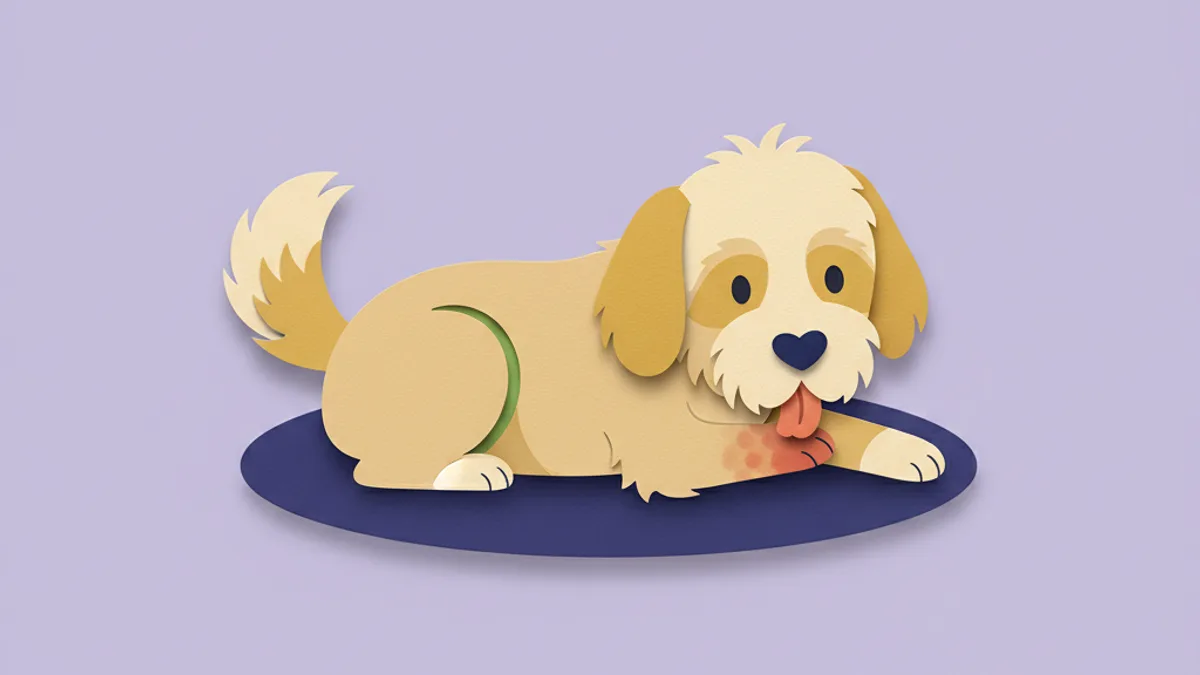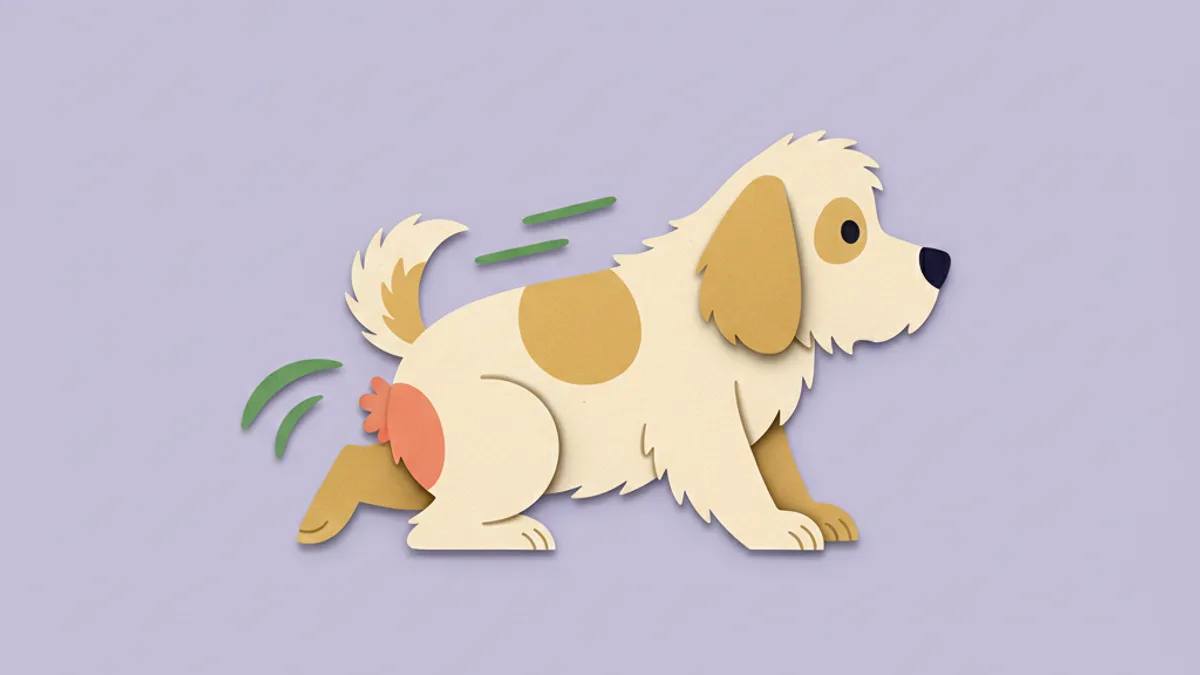
Your dog plants their bottom on the carpet and drags themselves forward with a determined look on their face. It's a funny sight — until it becomes a regular thing, and you start to wonder whether something's wrong. It usually is. Scooting is a sign of irritation around the rear end, and while the cause is most often the anal glands, the reason those glands keep causing trouble is frequently something further upstream — including allergies.
Here's what scooting actually means, the surprisingly common allergy connection, what you can do, and when it's time to call the vet.
Cause #1: the anal glands
Dogs have two small scent sacs just inside the anus, called anal glands (or anal sacs). Normally they empty a little each time your dog passes a firm stool. When they don't empty properly, they fill, swell and become uncomfortable — and your dog scoots to try to relieve the pressure. As PetMD's Dr. Michael Kearley puts it plainly:
The No. 1 cause of dog scooting is full anal glands.
Left alone, full glands can become impacted, then infected, and occasionally form an abscess that ruptures — which is painful and needs veterinary treatment. So scooting is worth taking seriously, even though it looks harmless.
The stool connection: why firmness matters
Here's the mechanism most owners don't realise: the glands rely on firm stool pressing against them to empty. When stool is soft or runny, that pressure is missing, the glands don't empty, and they back up.
Soft stool or diarrhea may worsen anal gland problems because firm stool normally provides pressure needed to empty the glands.
This is exactly why diet and gut health sit at the centre of recurring anal gland trouble — and where allergies enter the story.
The allergy link (the part people miss)
Allergies cause inflammation — and that inflammation doesn't stop at the skin. When a dog has food or environmental allergies, the tissue around the anal glands can become inflamed and swollen, narrowing the ducts and making the glands harder to empty. Food allergies can also upset the gut and soften the stool, removing the pressure the glands need. Worth Street Veterinary Center describes this allergy-to-anal-gland link directly: chronic allergic inflammation can leave the glands swollen, impacted or infected, producing scooting and licking.
So a dog who scoots and is itchy elsewhere — licking paws, recurring ear infections, a grumbly tummy — may have a single allergy underneath it all. If food is the trigger, the usual suspects are the everyday proteins:
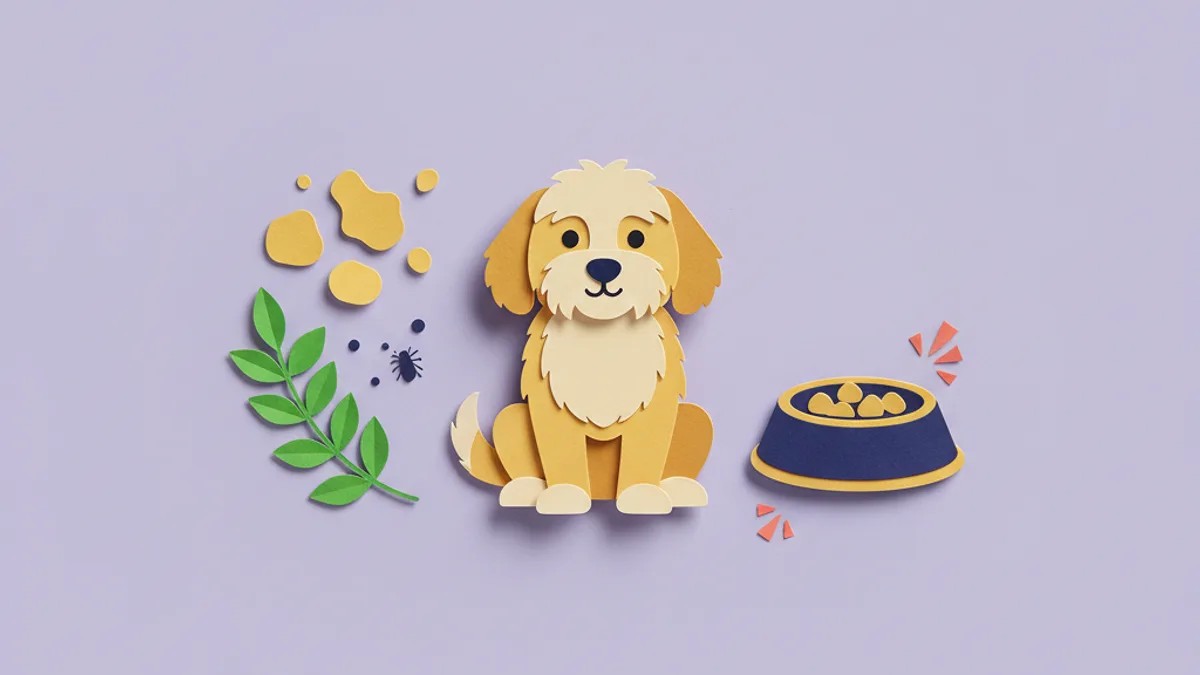
Most confirmed food allergies in dogs involve everyday animal proteins. Where food allergy is driving the gut upset and gland inflammation behind scooting, an elimination trial can identify the trigger. Source: Mueller & Olivry, BMC Veterinary Research (2016)
The other causes of scooting
Anal glands lead the list, but scooting can also come from:
- Parasites — tapeworm segments around the anus are itchy; you may see rice-like grains in the fur or stool.
- A dirty or matted rear — trapped faeces or matted fur (especially in long-coated dogs) irritates the skin.
- Skin irritation or a wound — including from the allergy itself, or a healing surgical site.
- Rectal or anal masses — less common, but a reason persistent scooting should always be checked.
- Residual itch after diarrhoea — a sore bottom from a recent bout of loose stool.
PetMD lists allergies, tapeworms and even tumours among the causes beyond the glands — which is exactly why persistent scooting deserves a proper look rather than a guess.
What you can do
Steps that help, alongside your vet's advice:
- See the vet for the glands — they can check and, if needed, express the glands and assess for infection. Don't attempt forceful at-home expression unless your vet has shown you how.
- Support firm stools — your vet may suggest adding fibre (such as a vet-recommended supplement or plain canned pumpkin) to bulk up the stool so the glands empty naturally.
- Keep the rear clean — trim long fur and check for trapped debris.
- Stay current on parasite control.
- Address the allergy — if scooting comes with itching, ears or gut signs, talk to your vet about investigating allergies, including a food trial.
Whole Dog Journal notes that adequate dietary fibre can help some dogs form firmer stools that express the glands naturally — but the right approach depends on why the stool is soft in the first place, which is why pinning down an allergy matters.
If scooting comes with itching or gut signs, an allergy may be behind it — explore the body map and run a guided food trial.
Map the signs & start freeFrequently asked questions
Why is my dog scooting its bottom on the floor?
Most often because the anal glands are full or impacted and uncomfortable, so the dog drags to relieve the pressure. Scooting can also come from tapeworms, a dirty or matted rear, skin irritation, or — less commonly — masses. Allergies frequently sit underneath recurring anal gland problems.
Can allergies cause anal gland problems and scooting?
Yes. Allergic inflammation can swell the tissue around the anal glands and narrow their ducts, and food allergies can soften the stool so the glands don't empty naturally. A dog that scoots and is also itchy, has recurring ear infections, or a grumbly gut may have one allergy driving it all.
Does diet affect my dog's anal glands?
It can. The glands rely on firm stool to empty, so anything that softens the stool — including food intolerance or allergy — can lead to backed-up glands. Adequate fibre helps some dogs form firmer stools, but if a food allergy is the root cause, identifying it with an elimination trial is the real fix.
Should I be worried about my dog scooting?
An occasional scoot can wait for a routine visit, but see your vet promptly if you notice blood or pus, a swelling beside the anus, pain, constant licking, or a foul smell — these suggest an impacted or infected anal gland. Persistent scooting always deserves a check.
Experts & sources cited
Every quote in this article is real and links to its original source. ThePawcess is not a veterinary practice — this is educational, not a diagnosis.
- Dr. Michael Kearley, DVMPetMD (veterinarian-authored, vet-reviewed) · USA
- Worth Street Veterinary CenterClinical education — allergies & anal gland issues · USA
- Mueller & OlivryBMC Veterinary Research — common food allergen sources in dogs (2016) · USA
- Whole Dog JournalVeterinarian-reviewed — fiber & anal glands · USA