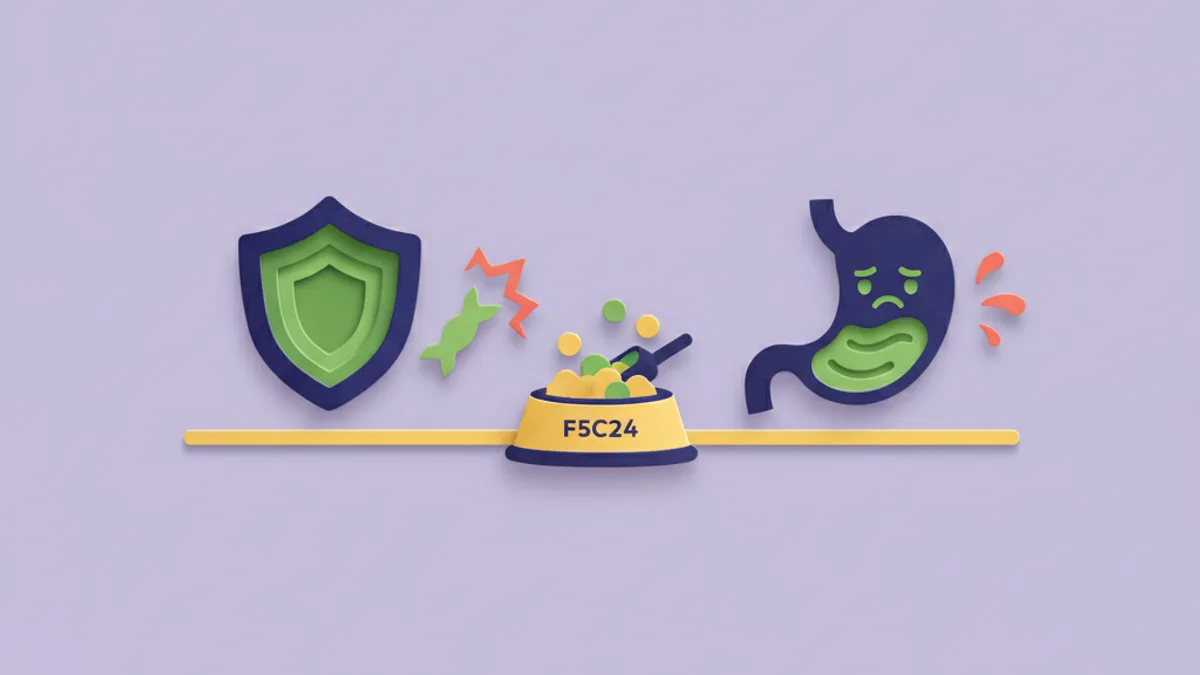
To your dog's body, a food allergy and a food intolerance are two different problems, driven by two different systems, showing up in two different ways. Understanding which one you're dealing with helps you make sense of the signs, set the right expectations, and have a sharper conversation with your vet.
Here's the real difference, why it matters, and — reassuringly — why the path to an answer is the same for both.
The umbrella term: adverse food reaction
Vets group all bad reactions to food under one umbrella — an adverse food reaction — and then split it into two main branches: those that involve the immune system (allergy) and those that don't (intolerance). It's a useful map, because the branch you're on shapes what you'll see and how the body behaves.
Food allergy: an immune-system problem
A food allergy is the immune system mistaking a harmless food protein for a threat and mounting a response. As PetMD's Dr. Alex Miller describes it:
Food allergies are an immune response to ingredients in a dog's diet.
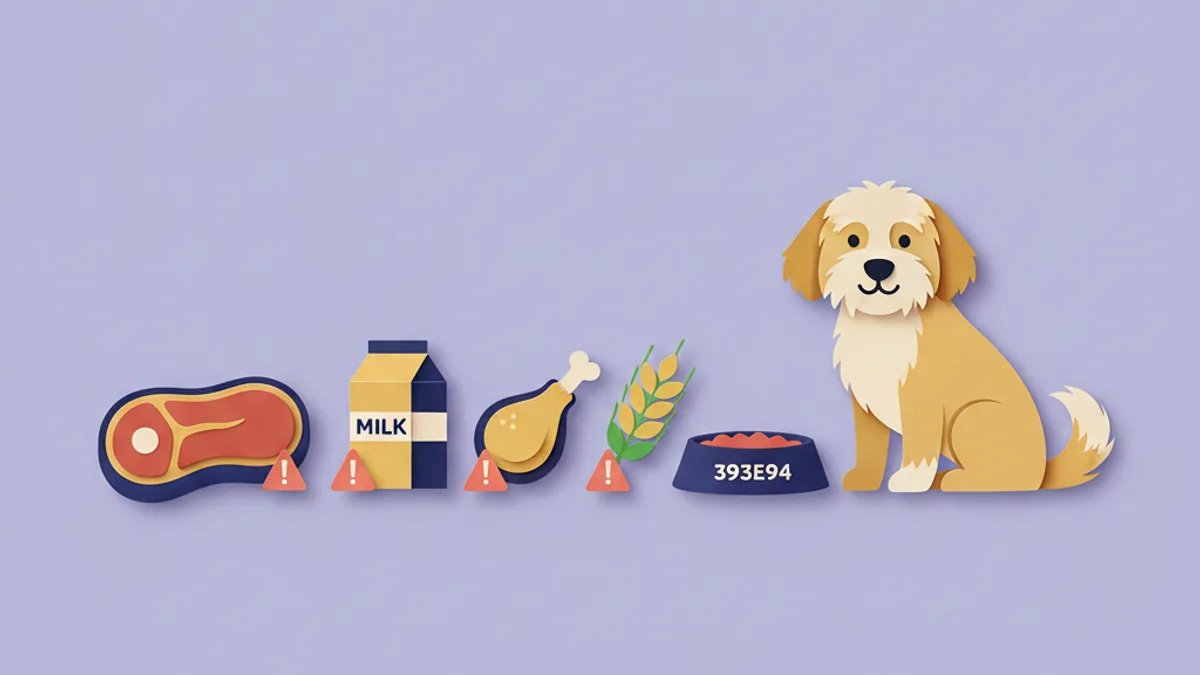
- What triggers it: proteins — most commonly beef, dairy, chicken and wheat.
- How it develops: slowly, over months of repeated exposure — so the trigger is usually a food the dog has eaten for a long time, not a brand-new one.
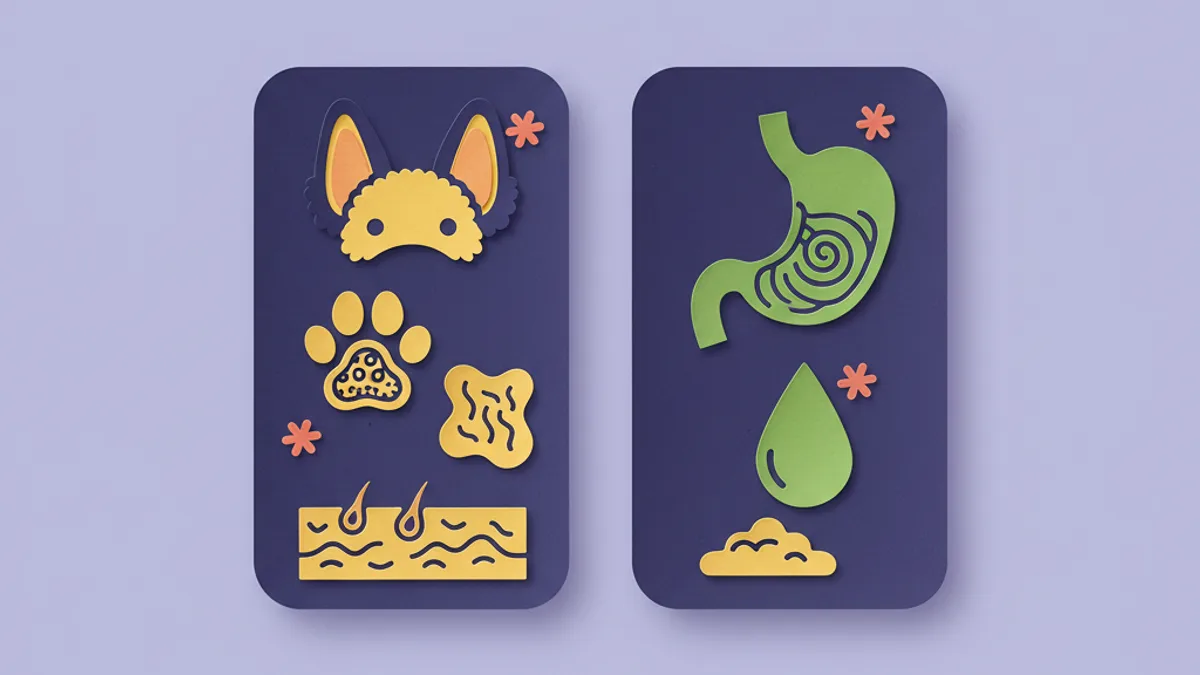
- Typical signs: itchy skin, recurring ear infections, paw licking, sometimes with gut signs too.
- Sensitivity: even trace amounts can set it off — which is why a food trial has to be so strict.
Because it's protein-driven, the allergen list is dominated by animal proteins:
Food allergies are immune reactions to proteins, which is why animal proteins top the list. An intolerance, by contrast, can be to almost any component — including non-protein ingredients. Source: Mueller & Olivry, BMC Veterinary Research (2016)
Food intolerance: a digestive problem
A food intolerance doesn't involve the immune system at all. It's the digestive system struggling to handle a food — think of a person who can't digest lactose. Dr. Miller draws the line clearly:
Food intolerance does not involve the immune system and can occur at any time, on the first exposure or over time.
- What triggers it: a wide range — a specific ingredient, a fatty meal, lactose, additives, or spoiled food.
- How it develops: it can happen the very first time, and is often dose-related — a little may be fine, a lot causes trouble.
- Typical signs: mostly gastrointestinal — loose stool, vomiting, gas, an unsettled tummy.
- Severity: usually uncomfortable rather than driven by an immune cascade.
Telling them apart by the signs
The clearest practical difference is where the trouble shows up. As a rough guide:
- Mostly itchy skin, ears and paws → leans toward food allergy.
- Mostly gut — loose stool, vomiting, gas → leans toward food intolerance.
- Both at once → entirely possible, and a reason not to self-diagnose.
It's only a guide, though. Allergies can cause some gut signs, and a miserable gut can affect the coat. Which is why the two are easy to confuse — and why you don't rely on the signs alone.
Why the difference matters
Two reasons. First, expectations: a true allergy means lifelong strict avoidance of the trigger protein, because trace amounts matter; an intolerance may be manageable by reducing or adjusting the food. Second, how careful you must be: the all-or-nothing strictness an allergy demands (no treats, no flavoured meds) is exactly why so many trials fail when owners treat it like a casual 'sensitivity'.
The good news: one test sorts out both
Here's the reassuring part. You don't have to figure out which branch you're on before you start — because the diagnostic tool is the same for both. There's no reliable blood or saliva test for either; the answer comes from an elimination diet trial. As Dr. Miller notes, both are diagnosed through a physical exam, the clinical signs, and the response to a food trial of 8–12 weeks.
You feed a single novel-protein or hydrolysed diet for the full period, watch which signs resolve, then reintroduce foods to see what brings them back. As dermatologist Dr. Heng Tham reminds us, a food reaction is only confirmed when signs settle on the diet and return on re-challenge. Whether the culprit turns out to be an allergy or an intolerance, the trial points you to the food to avoid — and that's what actually changes your dog's life.
Allergy or intolerance, a clean elimination trial finds the food to avoid. ThePawcess guides you through it.
Run the trial that answers both — freeFrequently asked questions
What's the difference between a food allergy and a food intolerance in dogs?
A food allergy is an immune-system reaction to a protein, usually causing itchy skin, ears and paws and sometimes gut signs, and can be triggered by trace amounts. A food intolerance is a digestive problem that doesn't involve the immune system, usually causes gut signs like loose stool or vomiting, can happen on first exposure, and is often dose-related.
Is a food 'sensitivity' the same as an allergy?
Not exactly. 'Sensitivity' is a loose, everyday word that's often used for what's really a food intolerance — a non-immune digestive reaction — rather than a true immune-mediated allergy. Both fall under 'adverse food reactions' and are diagnosed the same way.
Can a blood test tell if my dog has a food allergy or intolerance?
No reliable one exists for either. Blood and saliva 'food allergy' tests aren't accurate enough. Both food allergy and food intolerance are diagnosed with an elimination diet trial of about 8–12 weeks, followed by a re-challenge to confirm.
Does it matter which one my dog has?
Yes — it shapes expectations and care. A true allergy usually means strict, lifelong avoidance of the trigger because trace amounts matter, while an intolerance may be manageable by adjusting the amount or type of food. Either way, the elimination trial identifies the food to avoid.
Experts & sources cited
Every quote in this article is real and links to its original source. ThePawcess is not a veterinary practice — this is educational, not a diagnosis.
- Dr. Alex Miller, VMDPetMD — food allergies and intolerances in dogs · USA
- VCA Animal HospitalsClinical client education — adverse reactions to food in dogs · USA
- Mueller & OlivryBMC Veterinary Research — common food allergen sources in dogs (2016) · USA
- Dr. Heng L. Tham, DVM, DACVDBoard-certified veterinary dermatologist, Today's Veterinary Practice · USA